

If your website traffic moved around in late September, Google spam updates are the first thing worth ruling in or out. The September 2026 update is still rolling out, and it has left a lot of site owners asking a fair question: why does Google keep doing this?
Google’s team answered that question in person at a search event in Europe. Here is what they said, what it means in plain English, and what to check on your own site. If you manage a business website, our digital marketing team sees these questions every time an update lands.
What Happened With the Latest Google Spam Updates
Google announced the September 2026 spam update on September 24. Search Engine Roundtable reported that Google told it this update is different from the previous three, because it rolls out over about two weeks instead of the usual two days.
That longer window explains why the impact has come in waves. The first wave of ranking changes was seen from September 25 to 27. A second wave followed on September 30 and October 1. Two weeks from the announcement lands around October 8, so more movement is possible before it settles.
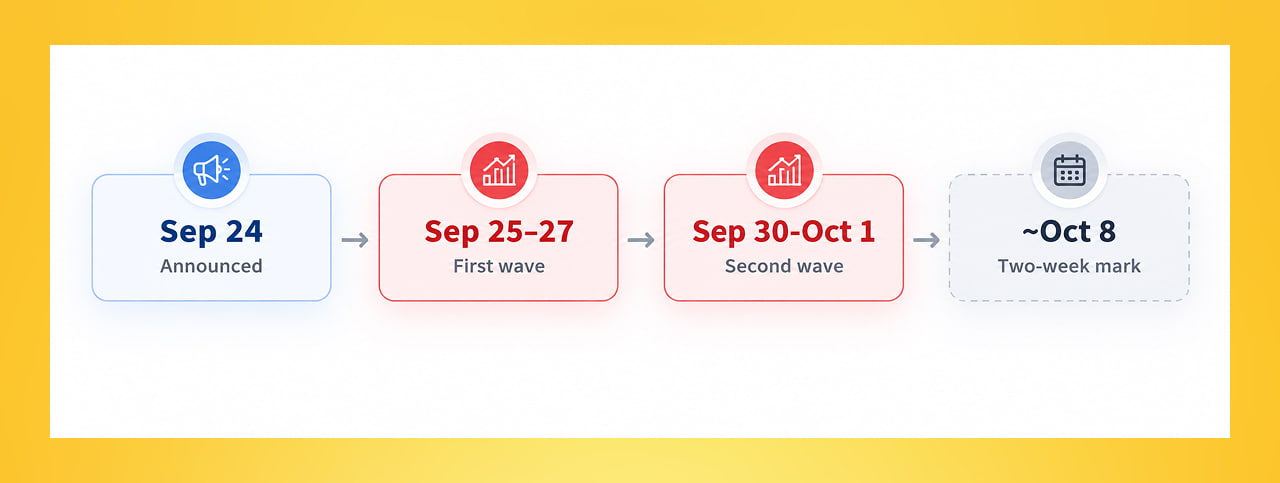
Wave dates are as observed and reported by Search Engine Roundtable. The October 8 mark is simply two weeks from the announcement.
Where the Explanation Came From
The explanation comes from Google’s Search Central Live Deep Dive, a three-day event held in Europe. We should be upfront about one thing: this is secondhand. Search Engine Roundtable relayed a recap of the event written by John Campbell of We Are Roast, so the wording is the recap writer’s, not a Google press release.
According to that recap, the message from Google’s team was fairly simple:
- There is far more new content on the web than before, so spam gets through more often.
- A high percentage of content is spam, and spam updates are aimed at it.
- Google is now using AI to help catch more of it.
- Scaled content is becoming a bigger problem than link spam. The recap credits this warning to Gary Illyes.
- Expect more spam updates.
One number from the event is worth knowing, but it is not new. Google says its systems find about 40 billion spammy pages every day.
The Three Reasons Google Gives for Constant Updates
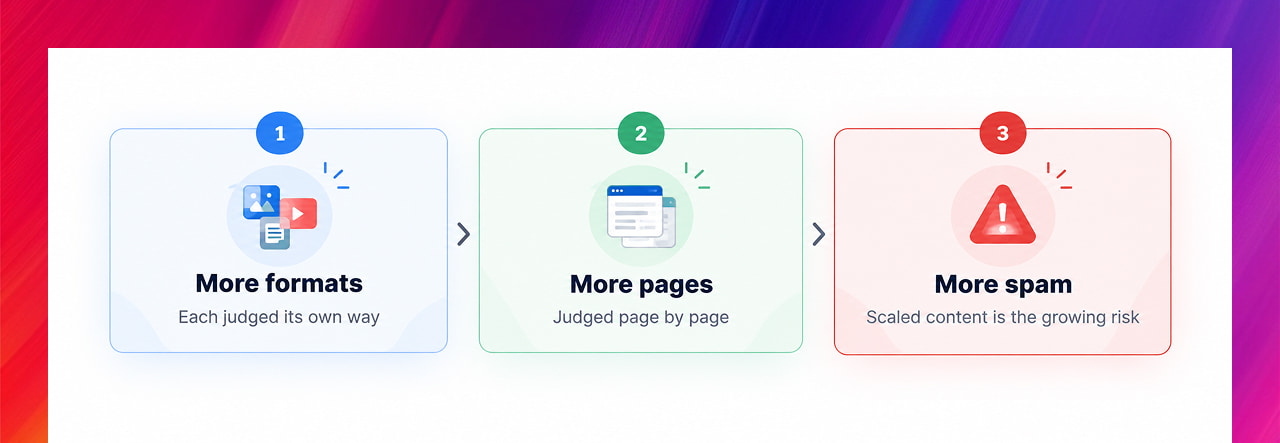
The same recap listed three reasons Google keeps changing how it judges quality. Laid out simply:
- More formats. Search is no longer ten blue links. Each kind of content needs its own way of being judged.
- More pages. There are many more pages and sites than there used to be. Core updates judge content page by page, not whole websites, which is why some pages on one site can rise while others fall.
- More spam. These are the updates that improve how Google catches cloaking, doorway pages, scraped content, link spam and hacked content, with scaled content now the growing concern.
What “Scaled Content” Actually Means
Scaled content sounds technical, but the idea is simple. Google defines scaled content abuse as producing many pages mainly to manipulate search rankings instead of helping people, whether the pages are made by automation, by humans, or by a mix of both.
The same Google post makes another point that is easy to miss. Using automation, including generative AI, is not spam by itself. It becomes spam when the main purpose is to manipulate rankings. Volume plus low value is the problem, not the tool.
Early reports on this update suggest that pages built from templates were among those affected, such as one near-identical page for every city or area code. That is early observation from SEO analysts, not something Google has confirmed.
How to Tell If Your Site Was Affected
- Check the dates. Look at your Google Search Console performance report and see whether changes line up with September 25 to 27 or September 30 to October 1.
- Look at pages, not just the total. Compare groups of similar pages, such as location pages or product pages, against your other content.
- Rule out other causes. Seasonality, tracking problems and a recent site change can all look like an update.
- Wait for the rollout to finish. Judging a ranking drop mid-rollout often leads to rushed edits you later regret.
What to Do About It
- Audit pages that follow a template. Ask a blunt question of each group: does this page tell the reader something the other pages on the site don’t?
- Add real substance where it is thin. Local facts, original photos, real prices and genuine examples all help.
- Review anything written with AI. Treat AI as a drafting aid, and have a person check facts and add experience before it goes live.
- Don’t delete in a panic. Removing pages can help, but recovery is rarely instant, and it works best when it follows an honest audit.
If your site relies on large groups of templated pages, a website development and content review is a sensible next step once the update settles.
Quick Takeaways
- Google announced the September 2026 spam update on September 24 and said it would roll out over about two weeks, longer than usual.
- Impact has been seen in waves, around September 25 to 27 and again on September 30 and October 1.
- A recap of a Google event in Europe says updates are more frequent because there is more content, more spam, and AI now helps catch it.
- Google defines scaled content abuse by purpose, not by tool: many pages made mainly to manipulate rankings.
- Wait for the rollout to finish, then audit templated and thin pages rather than reacting to one day’s numbers.
Want a Second Opinion on Your Own Traffic Dip?
Telling a spam update apart from a normal fluctuation takes a careful look at your data. Reach out through our contact form and we’ll help you work out what changed and what, if anything, needs fixing.