Here is a free trick for finding weak spots in your website: ask Google’s AI Mode follow-up questions what customers are likely to ask next. A new Search Engine Land article describes a method for doing exactly this, and the idea is simple enough for any business owner to try. If you want a clearer, more helpful site, our website design team can turn what you find into better pages.
Before we start, one honest note: this is one practitioner’s method, not an official Google recommendation. It is a useful way to think, not a ranking formula.
What Are Follow-up Questions in AI Mode?
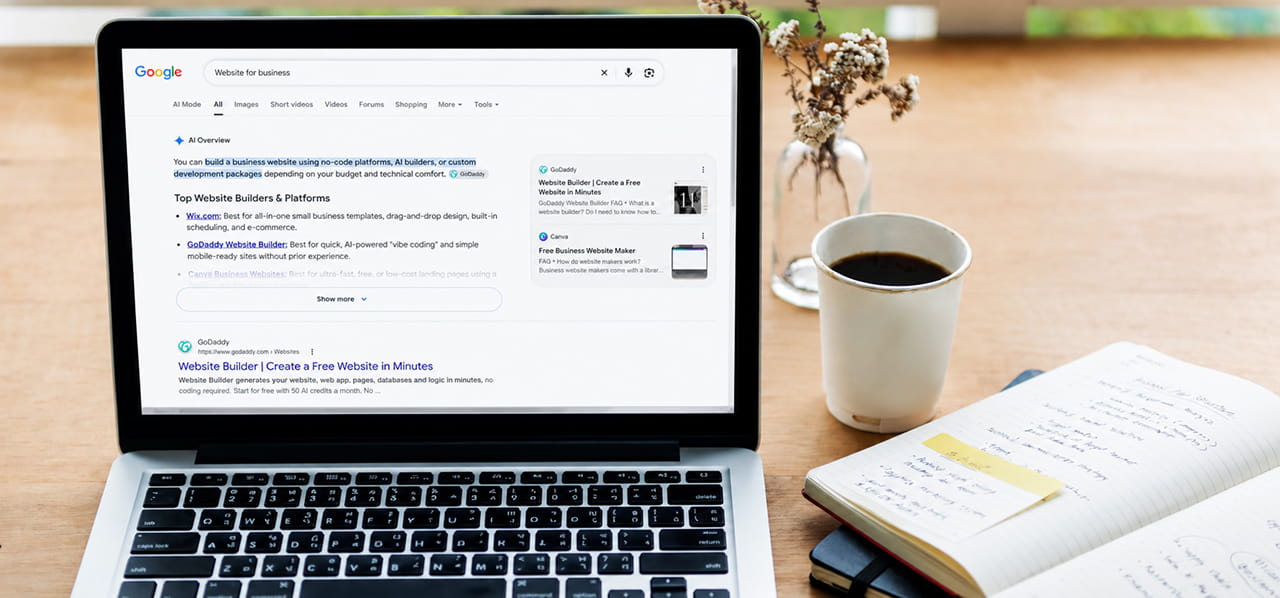
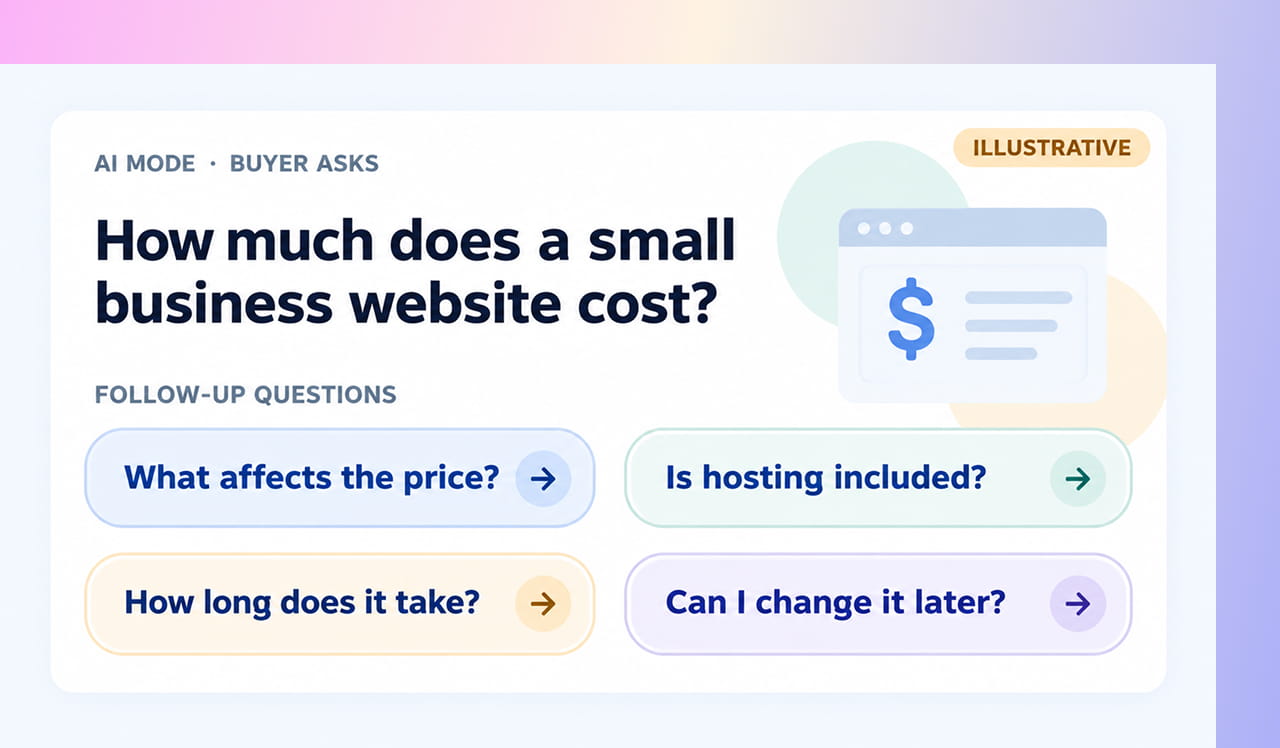
AI Mode is Google’s AI-powered search experience, where you chat with Google instead of scanning a list of links. After it answers, it suggests related questions you could ask next.
Claudia Tomina, a Google Product Expert, argues in Search Engine Land that these suggestions are more than a convenience. She says they show the path a buyer’s thinking takes, and that “those follow-up questions become your content map.”
The Problem With Most Service Pages
Look at a few competitors in your industry. Most service pages say nearly the same thing: who we are, what we offer, call us. Tomina’s point is that AI search has little to pick from when every page sounds alike. In her words, “generic claims give the model nothing distinctive to extract.”
That does not mean AI Mode is guaranteed to quote you if you add more detail. It means that pages with real, specific, helpful answers are better material for any search system, and for any human reader.
A Simple Version of the Method
Tomina’s full process has about ten phases and a long prompt. Here is a layman’s version you can try in an afternoon.
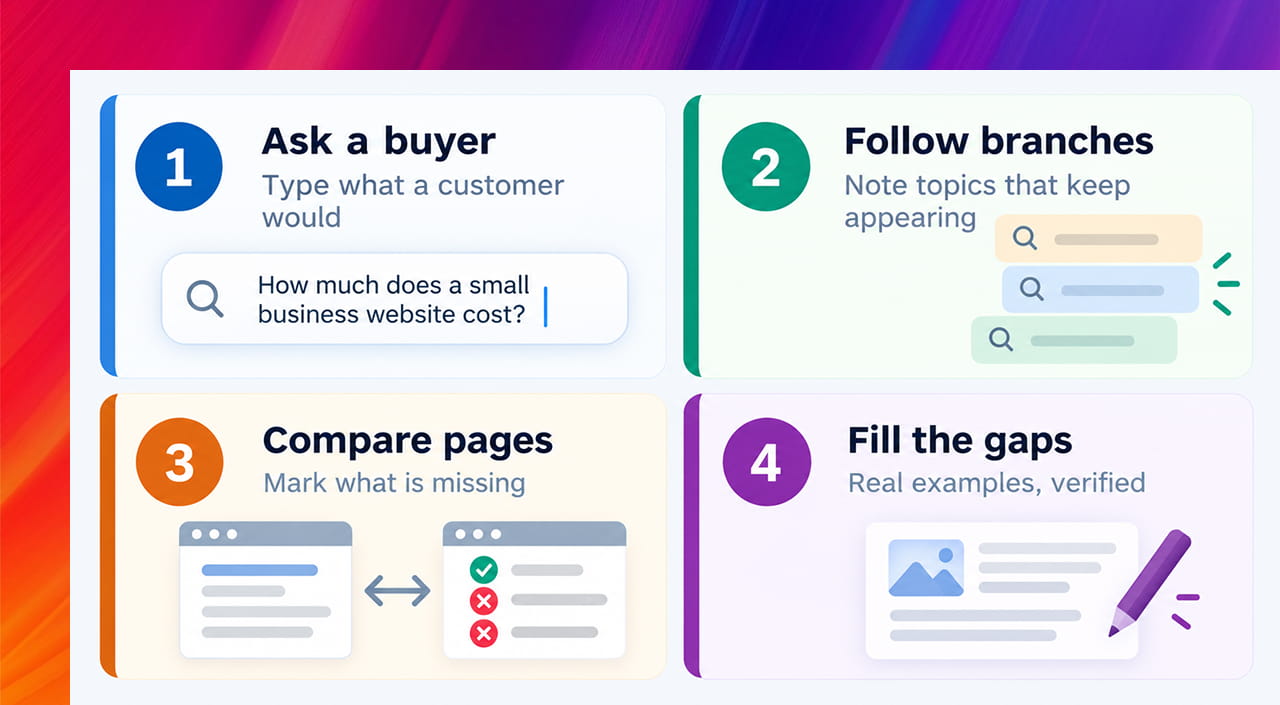
A simple four-step loop for finding content gaps with AI Mode.
- Ask a real buyer question. Open AI Mode and type what a customer would type, such as “How much does a small business website cost?” Use your own service.
- Follow the branches. Click the suggested follow-up questions and note which topics keep appearing: price factors, timelines, hosting, what happens later.
- Compare with your page. For each topic, ask honestly: does my page answer this clearly? Mark the gaps.
- Fill gaps with things only you know. Add real examples, your process, typical timelines, common mistakes you see, and answers from your own team.
What a Good Result Looks Like
In her example, a service page for a law firm was missing topics that kept showing up in the follow-up questions, such as how a state’s rules affect a case, how shared fault changes a settlement, and what to do when the other driver is uninsured. The business owner’s own recorded podcasts, about 13 hours of them, turned out to hold many of the missing answers.
You do not need a podcast. A recorded 30-minute interview with the person who actually does the work can give you plenty of real material.
The Safety Rule: Do Not Publish Guesses
This is the most useful part of the method. Tomina labels every finding as one of five types: observed, verified, client-supplied, inferred or unknown. Anything the AI cannot back up is marked “unknown” and goes back to the expert as a question instead of onto the page.
You can use the same habit without any special tool:
- If you saw it yourself or an expert confirmed it, it can go on the page.
- If it is a guess, find a source or ask the expert first.
- If it is a number (price, timeline, success rate), only publish figures you can stand behind.
This fits neatly with Google’s own advice to fact-check AI-assisted content before publishing.
Limits to Keep in Mind
- It is a sample of one. The author describes it that way herself. It is not a controlled study.
- The work uses AI tools, so a human still needs to check the facts, especially in sensitive fields such as legal or health topics.
- The article notes some manual effort, like collecting transcripts.
- The piece is a contributed article on Search Engine Land. Its disclosure says the contributor was not asked to mention Semrush, which owns the site.
Quick Takeaways
- AI Mode suggests follow-up questions after each answer. They can show what buyers want to know next.
- Most service pages are generic, so detailed first-hand answers stand out.
- Try the four-step loop: ask, follow, compare, fill gaps.
- Only publish facts you can verify, and send unknowns back to an expert.
- This is one practitioner’s method, not an official ranking rule.
Want Your Service Pages to Answer the Questions Buyers Really Ask?
We can review your key pages, find the gaps and help you turn your team’s knowledge into clear, trustworthy content. Reach out through our contact form and we will start with your most important service page. If your site also needs a stronger foundation, our digital marketing services cover content and search together.
Sources: