

Search engine optimization has evolved significantly over the past decade. What once worked—repeating keywords at a fixed density—has now been replaced by a more intelligent, user-focused approach. Today, over 68% of online experiences begin with a search engine, yet many websites still rely on outdated keyword tactics. Search intent optimization has emerged as the defining strategy of modern search engine optimization, focusing on understanding why users search and delivering content that directly satisfies that need. This shift is not just about rankings—it is about engagement, trust, and conversions.
Why Keyword Density Stopped Winning
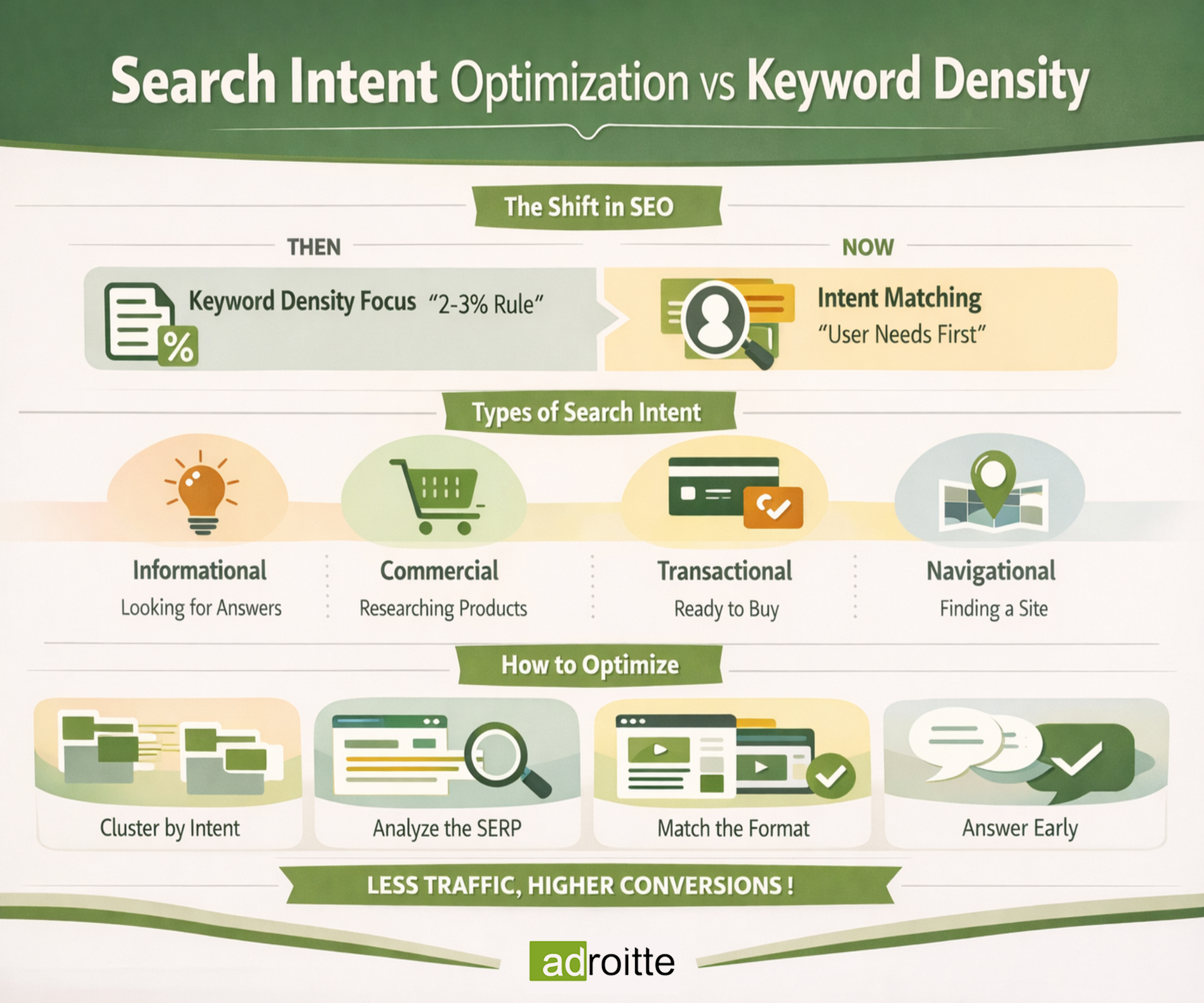
There was a time when SEO felt almost mechanical. Marketers calculated keyword density percentages and structured content around exact-match phrases. While this approach worked in earlier algorithms, search engines today are far more sophisticated. They evaluate how users interact with content—whether they stay, engage, or leave quickly. A page filled with keywords but lacking real value leads to high bounce rates and poor engagement signals. On the other hand, content that clearly answers user questions performs better, even if it uses fewer exact keywords. This is why keyword density is no longer a reliable ranking factor.
What is Search Intent Optimization?
Search intent refers to the underlying goal behind a query. It answers the question: what is the user trying to achieve? Search intent optimization is the process of aligning your content with that goal. Instead of asking how many times a keyword appears, you focus on whether the content solves the user’s problem effectively. This approach shifts SEO from a technical exercise to a strategic one, where understanding the audience becomes the primary driver of performance.
Why Search Intent Optimization Outperforms Keyword Density
Search engines increasingly rely on behavioral signals such as dwell time, click-through rate, and bounce rate to evaluate content quality. Pages that match user intent keep visitors engaged longer and encourage deeper interaction. Additionally, AI-powered search systems prioritize structured, meaningful answers over repetitive keyword usage. Research also shows that high-intent queries often generate better conversion rates, even with lower traffic volumes. This means businesses can achieve stronger outcomes by focusing on the right audience rather than simply increasing traffic numbers.
For example, a user searching for ‘best CRM for startups’ expects comparisons, features, and pricing insights—not a generic explanation of what a CRM is. Meeting this expectation is what drives both rankings and conversions.

Types of Search Intent
Understanding the different types of intent is essential for creating effective content. Informational intent involves users looking to learn something, often through guides or explanations. Commercial intent applies when users are comparing options before making a decision. Transactional intent indicates readiness to take action, such as purchasing or signing up. Navigational intent occurs when users are searching for a specific brand or page. Each type requires a different content structure, tone, and level of detail.
How to Implement Search Intent Optimization
The first step is to group keywords by intent rather than topic. This ensures that each page serves a clear purpose. Next, analyze search engine results to identify what formats are already ranking—whether guides, lists, or product pages. Design your content around a specific goal and ensure that the main answer appears early in the page. Use natural language throughout the content, allowing keywords to fit organically rather than forcing them into the text.
To execute this effectively, businesses often combine intent-driven content with professional seo services , digital marketing services and website development to ensure both visibility and user experience are optimized.
For a clearer understanding of how data translates into measurable growth, explore how key metrics, attribution models, and performance benchmarks shape smarter decision-making in digital marketing.

The Real Impact on Business Outcomes
Search intent optimization does more than improve rankings—it directly impacts business performance. By aligning content with user needs, companies can attract more qualified traffic, reduce bounce rates, and increase conversion rates. This approach ensures that every visitor has a higher likelihood of taking meaningful action, whether it is signing up, requesting a quote, or making a purchase.
If your current SEO strategy still revolves around keyword density, it is time to rethink your approach. Search intent optimization provides a more sustainable and effective path forward by focusing on real user needs. At Adroitte, we help businesses build intent-driven strategies that improve rankings, engagement, and conversions. If you want your content to perform better and deliver measurable results, now is the time to adopt an intent-first approach.
Ready to align your content with what users actually want? Reach out through our contact form and we’ll get back to you promptly. Let’s optimize for search intent with a strategy that improves relevance, boosts rankings, and drives more meaningful conversions.