
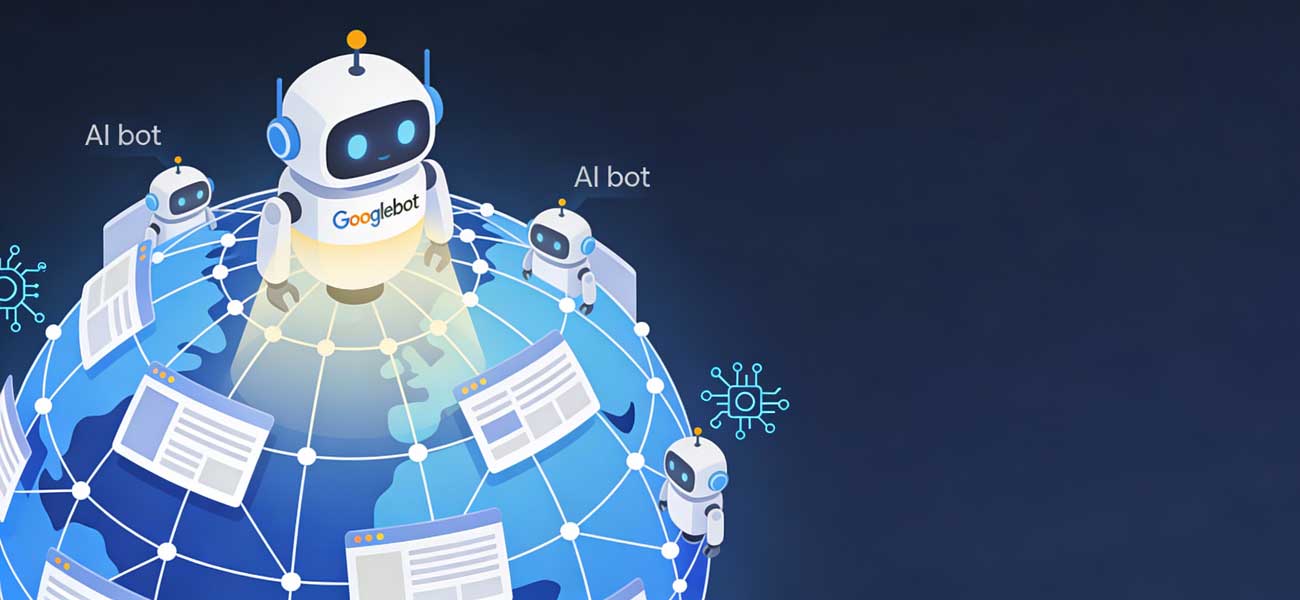
Googlebot rules web crawling in 2025, even with a big rise in AI bots grabbing data online. This means search engines and smart AI tools are scanning websites more than ever. Recent reports show it’s changing how websites work behind the scenes.
What Googlebot Does Best
Googlebot is Google’s main tool that visits websites to read and save their info for search results. In 2025, it handles more visits than any other crawler, making up over a quarter of all good bot traffic on big networks like Cloudflare. Think of it like the busiest mail carrier dropping off the most letters to every house on the block—it’s everywhere, checking pages non-stop.
This crawler alone causes about 4.5% of all page loads on many sites, which is a lot when you add up millions of visits daily. Websites feel this as extra work for their computers, but it helps get fresh info into Google searches fast.
[call_to_action title=”Stuck with Digital Marketing? We’ll Fix That.” text=”Work with a team that knows what works—and what doesn’t.”]
AI Bots Join the Party
AI bots from companies like OpenAI and others are exploding in numbers too, pulling in nearly as much traffic as Googlebot when you skip Google from the count—around 4.2% of page requests. These bots scoop up website content to train smarter AI models that answer questions or write stories.
Googlebot does double duty: it grabs data for regular searches and AI training, which is why it’s ahead of bots like GPTBot or ClaudeBot. Site owners are blocking some AI bots with simple “no entry” signs in files called robots.txt, but Googlebot keeps cruising.
Reasons for the Googlebot Boom
Googlebot’s visits jumped nearly double from 2024 to 2025 because Google mixes more AI into searches, like quick answer boxes that need up-to-date facts from everywhere. Its share of all crawler traffic shot up to half in some checks, leaving rivals like Bingbot in the dust.
Simply put, Google wants the newest, best info to serve billions of searches, so it sends Googlebot out more often across the world. This helps your site show up quicker in results, but it can slow down smaller websites if they’re not ready.
[call_to_action2 title=”Start Getting Better ROI—Today” text=”Let’s build campaigns that actually convert.”]
How It Hits Website Owners
For anyone running a site, Googlebot’s lead is good news for getting seen—Google sends almost 90% of search visitors. But the flood of bot visits adds real strain, like having extra guests at a party who eat all the snacks without chatting.
In busy areas, Googlebot and AI bots together make up over half the crawling, pushing site owners to buy better servers or smart filters. Small blogs or shops might see bills rise, even if humans don’t visit as much.
What’s Next for Websites
The web is turning into a machine playground more than a human hangout, with bots growing faster than total internet use. Expect Googlebot to keep growing as AI searches take over, while owners add walls like paid access or bot blocks.
In short, 2025 proves bots power the free info we love, but they cost sites time and money to host the party. Smart tweaks like better caching keep things smooth without losing search perks.
Want your website to stay competitive as AI bots reshape search in 2025? Reach out through our contact form and we’ll get back to you promptly. Let’s optimize your site for crawlability, structured data, and AI visibility so your brand leads—not lags—in the new search landscape.