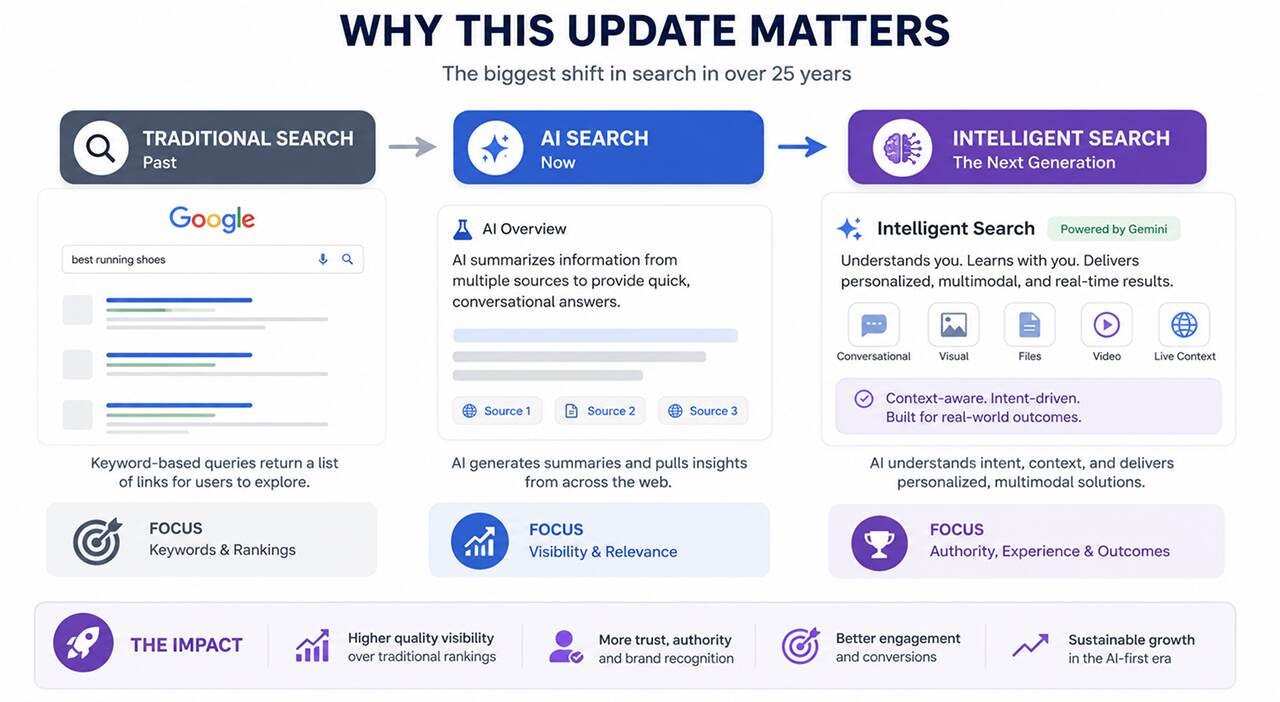
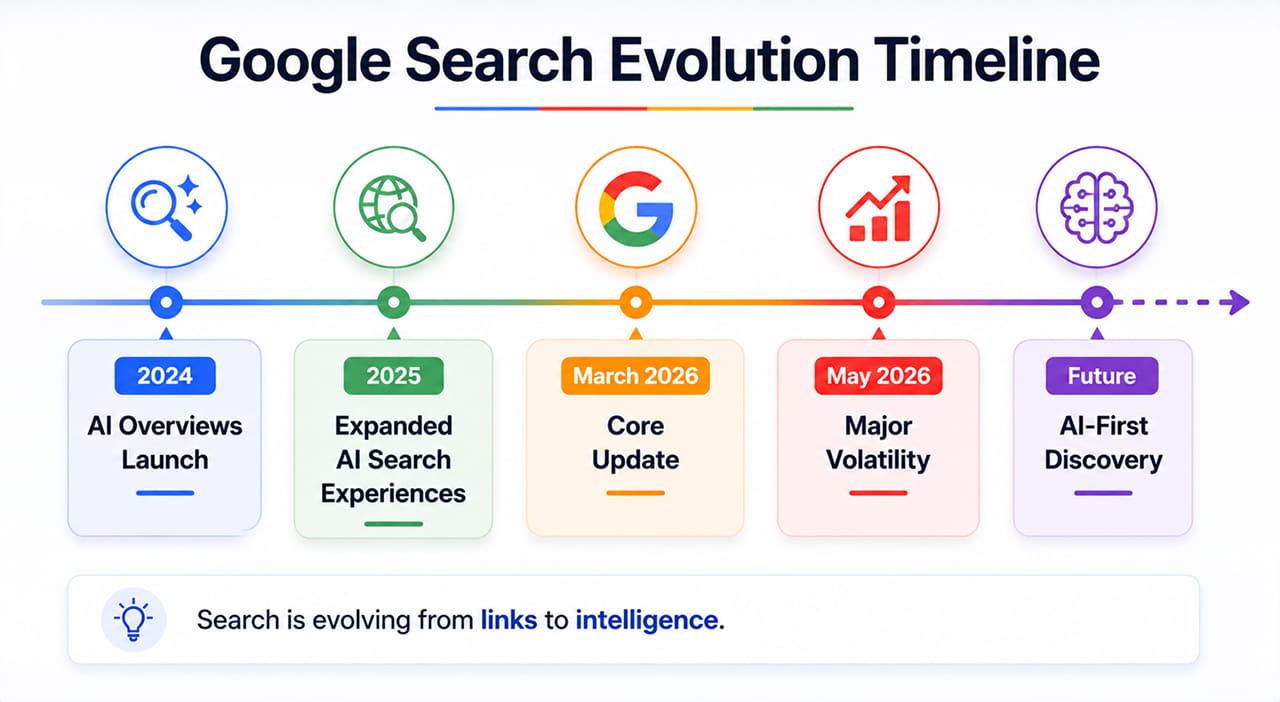
Google’s May 2026 Core Update generated significant discussion across the SEO industry. Ranking volatility trackers recorded unusual movement across multiple sectors, while publishers, ecommerce businesses, and service providers reported noticeable fluctuations in visibility. Although core updates are nothing new, this one feels different because it arrives at a time when Google is aggressively expanding AI-driven search experiences.
Many SEO professionals believe the update is not simply about rewarding better content. Instead, it appears to be part of a broader transition toward an AI-first search ecosystem where authority, trust, technical structure, and entity understanding matter more than traditional ranking tactics.
As search continues shifting toward AI-driven discovery, businesses need more than content optimization alone. Strong website architecture, technical performance, and user experience all contribute to how search engines and AI systems evaluate credibility and authority. Investing in professional website development services and strategic digital marketing services can help businesses build the technical and content foundations required for long-term search visibility.
What Happened During the Update?
Industry tracking tools reported substantial ranking movement across informational websites, affiliate publishers, review sites, and niche content platforms. Discussions across SEO communities suggested that many websites producing large volumes of generic content experienced visibility losses while recognised brands and authoritative publishers often showed greater resilience.
This observation aligns with a trend that has been building for several years. Google continues moving away from purely keyword-driven evaluation and toward systems designed to understand expertise, authority, trustworthiness, and user satisfaction.
The update appears to reinforce Google’s long-term objective of surfacing reliable information while reducing visibility for content that exists primarily to capture search traffic.
Google advises businesses to focus on creating helpful, people-first content rather than attempting to optimize for individual algorithm changes. Reviewing Google’s guidance on core updates can help organizations better understand the long-term principles behind ranking improvements.
Why This Update Feels Different From Previous Core Updates
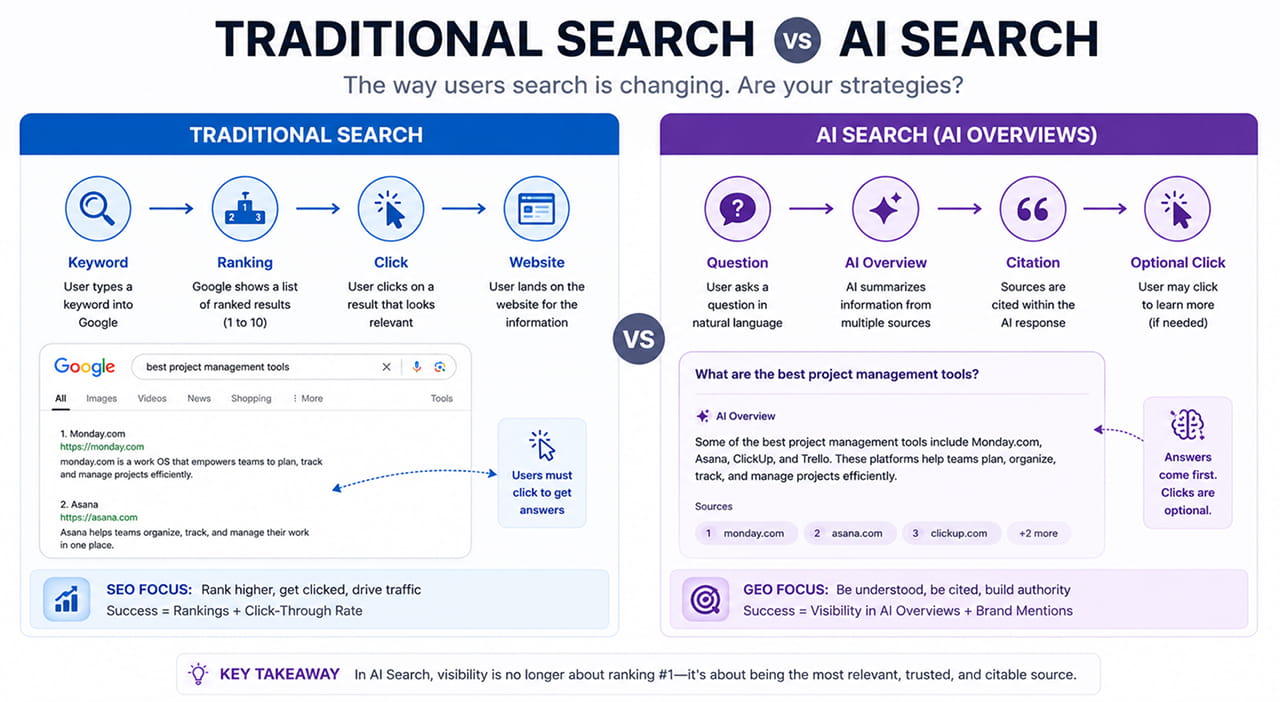
Historically, businesses focused heavily on rankings, backlinks, and keyword optimisation. While these factors remain important, AI-powered search experiences are changing the rules.
Today, visibility increasingly depends on:
- Topical authority
- Entity recognition
- Source credibility
- Content structure
- User engagement signals
- Technical accessibility
The difference is subtle but important. Google is increasingly evaluating whether a website deserves to be referenced and cited by AI systems, not simply whether it matches a keyword query.
Businesses investing in technical SEO services are increasingly focusing on how content is understood by both traditional search engines and AI retrieval systems.
AI Overviews Are Reshaping Search Visibility
One of the biggest developments surrounding this update is the continued expansion of Google AI Overviews.
Users increasingly receive comprehensive answers directly within search results. Instead of clicking multiple links to gather information, users often receive summarised responses generated from multiple sources.
For businesses, this creates a new challenge.
Ranking highly no longer guarantees traffic.
A website may contribute information to an AI-generated response without receiving the same volume of clicks that it would have received under traditional search behaviour.
This shift is causing marketers to rethink how they measure SEO success. Visibility, citations, mentions, and brand recognition are becoming increasingly important alongside traditional traffic metrics.
As AI becomes more integrated into search, businesses should understand how Google evaluates AI-assisted content. Google’s approach to AI-powered search experiences emphasizes content quality, originality, and usefulness rather than the method used to create content.
Search Visibility No Longer Means Traffic
Many publishers have discovered that maintaining rankings does not automatically preserve traffic levels.
As AI-generated answers satisfy user intent directly within search results, businesses must increasingly optimise content for:
- AI citations
- Brand mentions
- Entity relevance
- Expert contributions
- Topic ownership
This represents one of the most significant changes to search strategy in more than a decade.
What SEO Professionals Are Seeing Across Industries
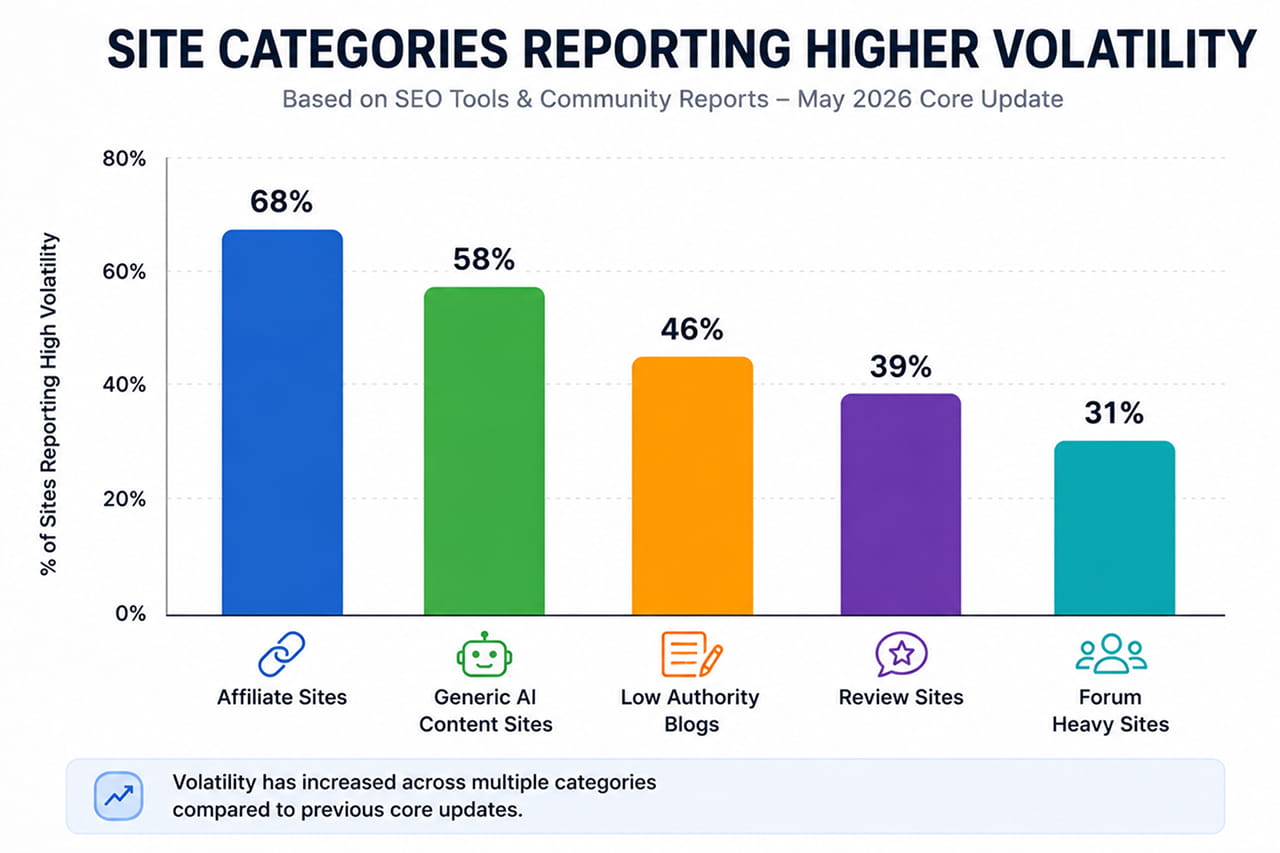
Conversations across the SEO industry reveal several recurring patterns.
Informational websites are experiencing greater volatility than transactional websites. Generic AI-generated content appears to be under greater scrutiny. Strong brands continue demonstrating resilience. Expert-led content often performs better than anonymous content.
Many SEO professionals are also reporting that content depth matters more than content volume.
Publishing large quantities of average content is becoming less effective than producing authoritative content that comprehensively addresses a subject.
Why Technical SEO Matters More Than Ever
As search engines increasingly rely on AI systems, technical website quality becomes a larger component of visibility.
Technical SEO services now extend far beyond fixing crawl errors.
Modern technical optimisation focuses on:
- Structured data implementation
- Schema markup
- Internal linking architecture
- Content hierarchy
- Crawl efficiency
- Core Web Vitals
- Entity relationships
Businesses with clean technical infrastructure often make it easier for search engines and AI systems to understand their content.
This is one reason many organisations are combining technical SEO initiatives with scalable website development strategies.
The Growing Importance of Entity-Based SEO
Another major theme emerging from the update is entity understanding.
Google increasingly evaluates relationships between people, organisations, products, services, and topics.
Rather than focusing solely on keywords, modern search systems attempt to understand context.
For example, a website discussing technical SEO services may benefit not only from keyword optimisation but also from demonstrating expertise across related topics such as website development, structured data, search visibility, content architecture, and AI search.
This broader understanding helps search engines identify authoritative sources within a subject area.
What Businesses Should Focus on Next
The businesses most likely to succeed after this update are those focusing on long-term authority rather than short-term ranking tactics.
Recommended priorities include:
- Build comprehensive topical authority.
- Strengthen technical SEO foundations.
- Improve content depth and expertise.
- Develop stronger brand recognition.
- Create content that AI systems can easily understand and cite.
- Improve internal linking and content relationships.
- Invest in structured data and semantic architecture.
These strategies support both traditional SEO and future AI-driven discovery systems.
What This Means for the Future of Search
The May 2026 Core Update may ultimately be remembered not for ranking volatility but for what it revealed about Google’s direction.
Search is evolving from a ranking-focused ecosystem into an AI-assisted discovery ecosystem.
Businesses that continue relying exclusively on traditional SEO tactics may find it increasingly difficult to maintain visibility.
Those investing in technical SEO services, structured content architecture, trusted expertise, and long-term authority building are likely to be better positioned as AI search continues evolving.
Key Takeaways
The update highlights a larger industry transformation. Rankings remain important, but they are no longer the only measure of success. Visibility, citations, discoverability, authority, and trust are becoming increasingly important in an AI-first search environment.
Businesses that adapt early will be better prepared for future updates and future search behaviour.
Looking to stay ahead as search continues to evolve? Reach out through our contact form and we’ll get back to you promptly. Let’s create a future-ready website and SEO strategy that strengthens visibility, enhances user experience, and positions your business for sustainable digital growth.