

Most businesses assume that competitors are generating more leads and sales because they have larger marketing budgets. It is an easy conclusion to reach. When a competitor appears more visible online, it is natural to assume they are spending more on advertising, SEO, social media marketing, and content marketing.
However, marketing investment is only part of the equation.
Across many industries, businesses are targeting similar audiences, using the same digital channels, and competing for the same customers. Yet some companies consistently generate more enquiries, sales, and revenue from their websites than others.
The reason is often surprisingly simple.
While many businesses focus almost entirely on attracting visitors, successful competitors pay equal attention to what happens after those visitors arrive. They understand that website traffic alone does not generate revenue. Revenue is generated when visitors act.
This is where website conversion optimization becomes a critical competitive advantage.
Businesses looking to improve conversions often discover that performance issues originate from the website itself. Investing in professional website design, user experience improvements, and technical enhancements through expert website development services can help create a stronger foundation for long-term growth. website development services
According to Statista, businesses that invest in improving customer experience, reducing friction, building trust, and guiding visitors toward conversion often outperform competitors that focus solely on traffic generation.
If your competitor’s website seems to be delivering better results, there is a strong possibility they are doing several things differently
behind the scenes.
Why More Traffic Doesn’t Always Lead to More Sales
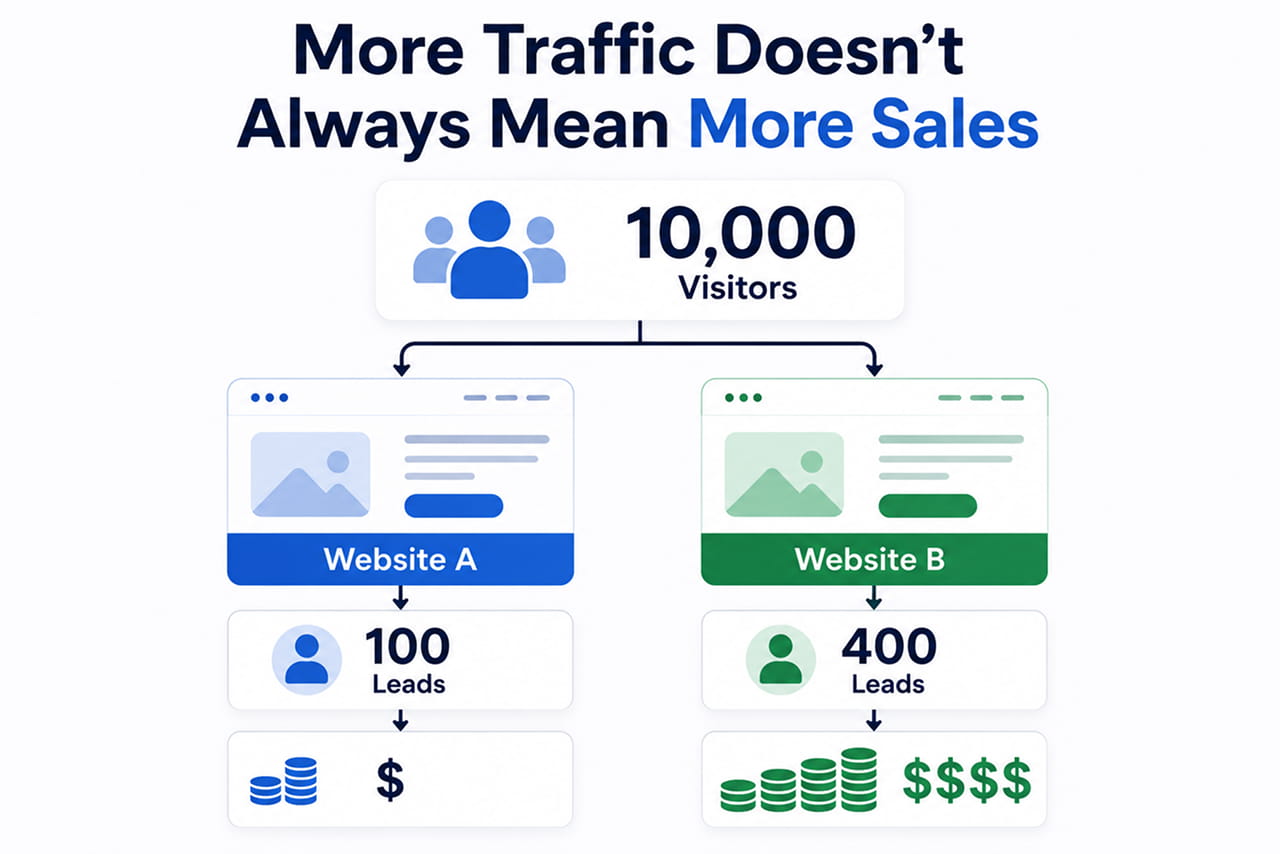
One of the most common misconceptions in digital marketing is the belief that more website traffic automatically results in more business opportunities.
In reality, traffic is only valuable if it contributes to meaningful outcomes.
Consider two businesses that each receive 10,000 website visitors every month. If one website converts one percent of visitors into leads while another converts four percent, the second business generates four times as many opportunities without attracting a single additional visitor.
This example highlights an important truth. Businesses do not necessarily need more traffic to improve results. In many cases, they need a website that performs better. Website traffic alone is not a reliable measure of success because conversion rates vary widely across industries and customer segments.
Successful competitors understand this principle. Rather than measuring success solely by visitor numbers, they focus on how effectively their website converts interest into action. They analyze customer behavior, identify barriers that prevent conversions, and make continuous improvements to the user experience.
This approach allows them to generate greater value from every visitor and maximize the return on their marketing investment.
How Website Conversion Optimization Creates a Competitive Advantage
Website conversion optimization is the process of improving a website so that more visitors complete desired actions. These actions may include requesting a quote, booking a consultation, downloading a resource, submitting a contact form, or making a purchase.
Many businesses view their website as a digital brochure. Competitors that consistently outperform the market view their website as a business development tool.
This difference in mindset influences every aspect of website strategy.
Rather than asking how many visitors a page receives, they ask whether the page encourages visitors to take action. Rather than focusing solely on appearance, they focus on performance. Rather than relying on assumptions, they use data to guide decisions.
The result is a website that works harder to support business growth.
Website conversion optimization is rarely about one dramatic change. Instead, it involves improving dozens of smaller elements that influence user behavior. Clearer messaging, stronger calls to action, faster page speeds, simplified navigation, and more persuasive content can all contribute to better results.
Over time, these incremental improvements create a significant competitive advantage that is difficult for less proactive businesses to match.
Website performance is not a one-time achievement. Ongoing updates, security monitoring, and technical improvements are essential to maintaining a positive user experience and supporting business growth. Businesses that prioritize regular website maintenance are often better equipped to adapt to changing customer expectations and technology requirements. digital marketing services
The Hidden Friction That Drives Potential Customers Away
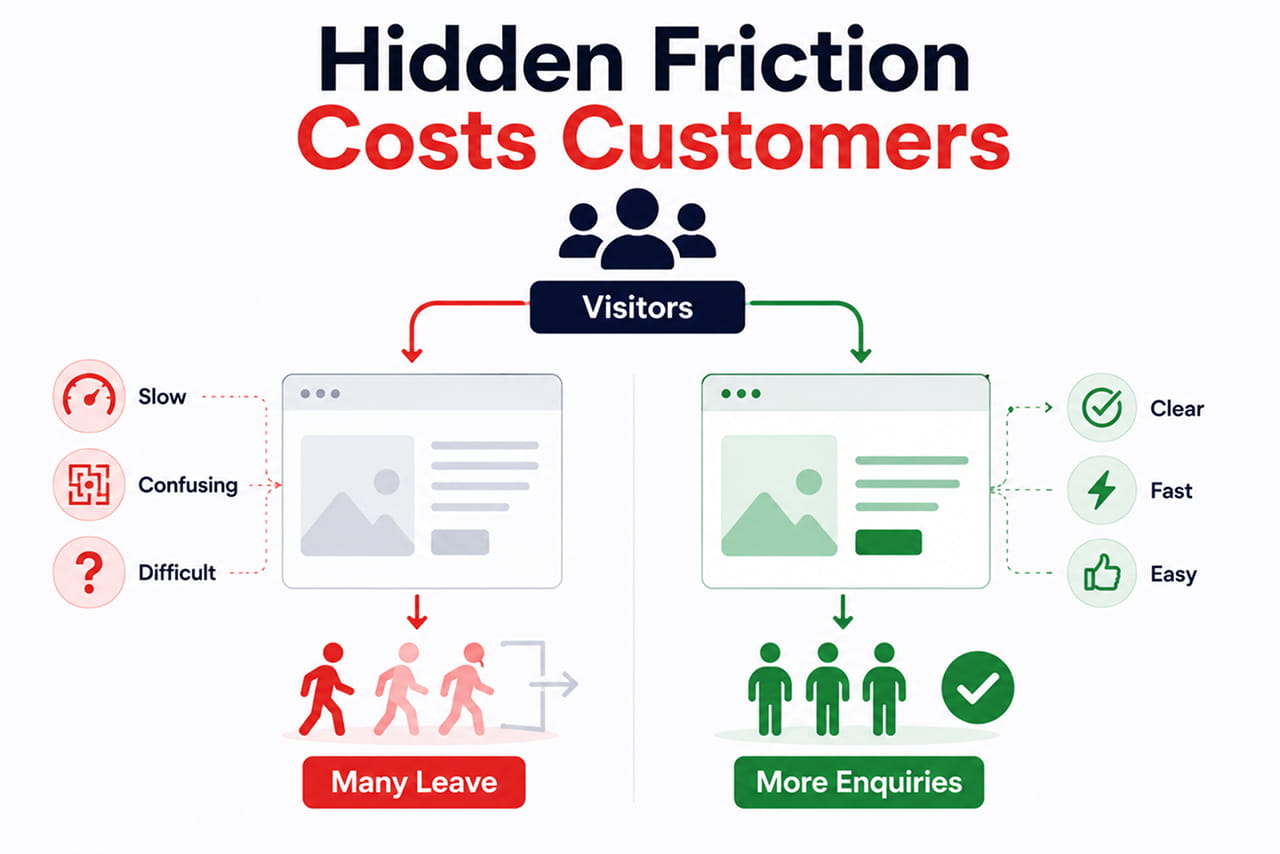
Many businesses lose valuable opportunities without ever realizing it.
Visitors often arrive on a website with genuine interest in a company’s products or services. However, even minor frustrations can discourage them from taking the next step.
This is known as friction.
Friction occurs whenever something makes it more difficult for users to achieve their goals. It may be a confusing navigation structure, an unclear value proposition, a lengthy contact form, or a page that takes too long to load.
Customers rarely explain why they leave. Instead, they simply abandon the website and continue searching elsewhere.
Competitors that generate stronger online results actively work to eliminate these barriers. Their websites are designed to make decision-making easier, not harder. Information is organized logically, important pages are easy to find, and users always know what action to take next.
The cumulative effect of reducing friction can be substantial. Even small improvements often lead to noticeable increases in enquiries, sales, and customer engagement.
Why High-Performing Websites Focus on Trust Before Conversion
Before customers choose a business, they need confidence that the company can deliver on its promises.
Trust has become one of the most important factors influencing online purchasing decisions.
Successful competitors understand that visitors are evaluating more than products and services. They are also evaluating credibility, expertise, reliability, and professionalism.
This is why high-performing websites invest heavily in trust-building elements.
Customer testimonials, case studies, project portfolios, certifications, client success stories, and detailed service information all help reassure potential customers. These elements provide evidence that the business has successfully delivered results for others.
Trust becomes even more important when customers are considering significant investments or long-term partnerships.
Businesses that fail to establish credibility often lose opportunities to competitors that appear more trustworthy, even when the quality of their services may be similar.
Building trust is not a one-time activity. It should be integrated throughout the customer journey to reinforce confidence at every stage of the decision-making process.
What Competitors Understand About Customer Behaviour
Many underperforming websites are built around what the business wants to say.
Successful websites are built around what customers want to know.
This distinction has a profound impact on performance.
Visitors arrive on a website with specific questions. They want to understand whether a business can solve their problem, how the solution works, why they should trust the company, and what steps they should take next.
Competitors that outperform others online structure their websites around these needs.
Instead of focusing exclusively on company achievements, they create content that educates, informs, and addresses customer concerns. They anticipate objections and provide answers before customers need to ask.
This customer-centric approach improves engagement because visitors feel understood. It also helps businesses position themselves as trusted advisors rather than simply service providers.
When a website aligns with customer intent, conversions often improve naturally.
Website Maintenance and Performance: The Overlooked Growth Factors
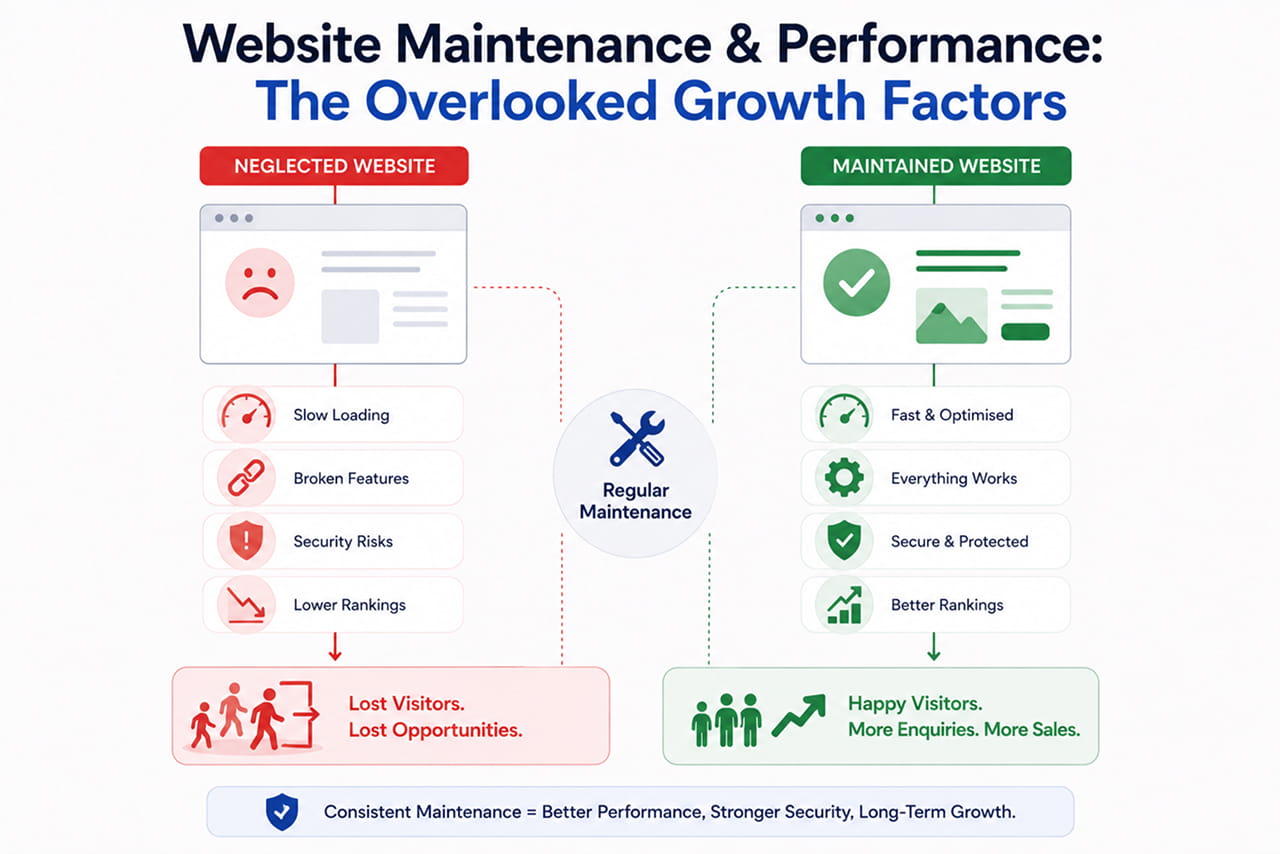
Many businesses view website maintenance as a technical necessity rather than a business strategy.
However, ongoing maintenance plays an important role in supporting website performance and long-term growth.
Competitors that consistently generate strong results rarely ignore their websites after launch. They invest in regular updates, security monitoring, performance optimization, and technical improvements to ensure everything continues functioning as expected.
Without proper maintenance, websites can gradually develop problems that affect user experience. Pages may load more slowly, functionality may break, security vulnerabilities may emerge, and search visibility may decline.
These issues often develop gradually, making them easy to overlook until they begin affecting enquiries and sales.
Regular website maintenance helps businesses avoid these challenges while ensuring customers continue to enjoy a fast, reliable, and professional experience.
Businesses looking to improve long-term website performance often choose to outsource website maintenance to ensure updates, monitoring, and technical support are handled consistently.
According to Statista, conversion rates can vary significantly across industries, highlighting the importance of optimizing websites to turn visitors into leads and customers.
Why Continuous Improvement Matters More Than Perfection
One of the most important lessons successful competitors understand is that websites are never truly finished.
Customer expectations evolve. Technology changes. Search engines introduce new requirements. Competitive landscapes shift.
Businesses that treat their website as a completed project often fall behind over time.
In contrast, high-performing organizations adopt a mindset of continuous improvement. They review performance data, evaluate user behavior, identify opportunities, and make ongoing enhancements.
These improvements do not need to be dramatic. Small adjustments made consistently often produce better results than large-scale redesigns performed every few years.
Continuous improvement also reduces risk because businesses can test changes incrementally and measure outcomes before making larger investments.
Over time, this approach creates websites that remain relevant, competitive, and aligned with customer expectations.
Closing the Gap Between Your Website and Your Competitors
If your competitor’s website appears to be generating more leads, more enquiries, or more sales, the explanation may not be a larger marketing budget.
More often, the difference lies in how effectively their website supports the customer journey.
Successful businesses understand that attracting visitors is only half the challenge. They invest in website conversion optimization to ensure visitors have a positive experience, trust the business, and feel confident taking the next step.
They continuously improve performance, remove friction, strengthen credibility, and adapt to changing customer expectations.
The encouraging news is that competitive advantages are rarely created overnight. They are built through consistent improvements that accumulate overtime.
The same principle applies to catching up.
Businesses that evaluate their website honestly identify weaknesses and commit to ongoing optimization can significantly improve results without dramatically increasing marketing spending.
Instead of asking why your competitors are winning online, ask a more valuable question:
What is their website doing differently, and what opportunities does that reveal for your business?
The answer could unlock one of your most effective growth strategies.
Is your website generating traffic but failing to convert visitors into customers? The difference often comes down to strategy, performance, and user experience. Businesses that consistently outperform their competitors invest in websites that are faster, more intuitive, and designed around customer needs.
Reach out through our contact form and we’ll get back to you promptly. Let’s identify the gaps holding your website back and build a digital experience that drives engagement, increases conversions, and helps your business stay ahead of the competition.