
Website redesign SEO should be a priority from the earliest planning stages of any redesign project. While a redesign can improve user experience and website performance, it can also affect rankings, traffic, and visibility if SEO considerations are overlooked. Few digital projects generate as much excitement—and anxiety—as a website redesign.
For many businesses, redesigning a website signals progress. It may reflect a rebrand, changing customer expectations, the introduction of new services, or the need to modernize an outdated digital presence. A redesigned website promises faster experience, improved usability, stronger visual appeal, and better conversion opportunities.
Yet beneath the excitement lies a concern that prevents many organizations from moving forward.
What happens to the SEO rankings and organic traffic that took years to build?
It’s a fear rooted in reality. Search professionals have countless stories of businesses launching beautifully redesigned websites only to watch organic traffic decline in the weeks that followed. Rankings disappeared, enquiries slowed, and teams scrambled to identify what went wrong.
However, redesign itself is rarely the problem.
Often, traffic losses occur because SEO is treated as an afterthought rather than a core component of the redesign process. When design decisions are made without understanding what currently drives visibility, businesses unintentionally remove many of the assets that helped them succeed in search in the first place.
Businesses exploring Website Design Services often achieve stronger outcomes when they focus on evolution rather than complete reinvention.
The goal should not simply be to launch something different.
It should be to launch something better.
Why Website Redesigns Sometimes Go Wrong
One of the biggest misconceptions surrounding website redesigns is that SEO concerns begin after the new site launches. By that stage, many of the most important decisions have already been made.
A page that ranked well for years may suddenly disappear because it no longer fits the revised navigation. URLs may change without proper redirects. Metadata may be lost during migration. Internal linking structures built over time may be abandoned in favor of cleaner layouts. Content that once addressed valuable search intent may be condensed dramatically because it no longer aligns with a minimalist design approach.
Individually, these changes may seem insignificant. Collectively, they can alter how search engines understand a website.
According to Google’s guidance on website migrations, changes involving URLs, site architecture, and content require careful planning because search engines rely on consistency to interpret and evaluate websites over time. When too many variables change simultaneously without a clear transition strategy, rankings can become volatile.
The objective, therefore, should not be to preserve every element of an outdated website. Rather, it is to understand what currently contributes to success and ensure that redesign decisions build upon those strengths.
Start With Data, Not Design Concepts
Website redesign SEO should be a priority from the earliest planning stages of any redesign project. While a redesign can improve user experience and website performance, it can also affect rankings, traffic, and visibility if SEO considerations are overlooked. Many redesign discussions begin with visual inspiration. Teams compare competitor websites, review current design trends, and identify features they would like to introduce.
While these conversations are important, they should be informed by data rather than assumptions.
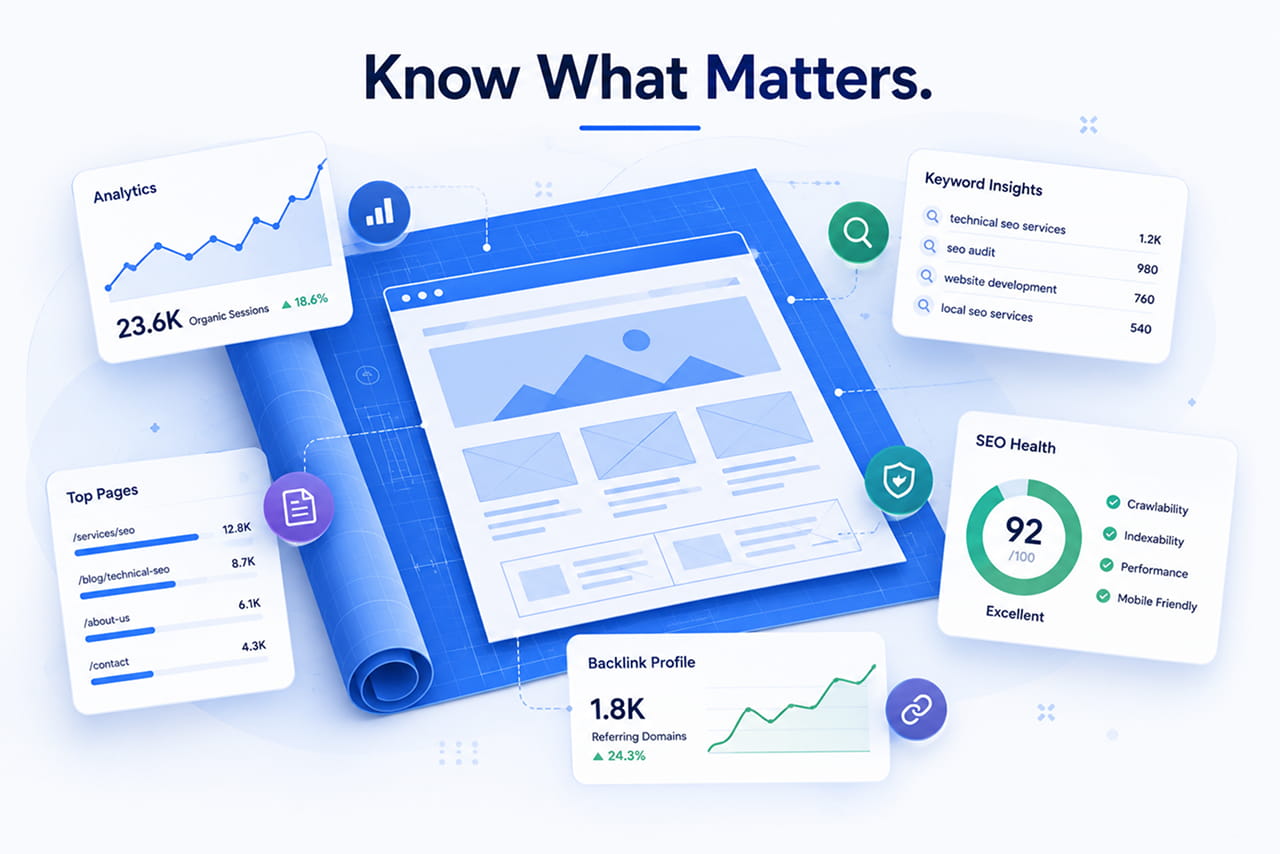
Before the first wireframe is created, businesses should conduct a comprehensive SEO audit to understand how their existing website performs. The audit becomes a roadmap that highlights what deserves protection throughout the redesign process.
For example, it may reveal that a particular service page consistently attracts qualified traffic despite looking visually outdated. A blog article published several years ago may continue generating enquiries because it addresses a recurring customer concern. Backlinks earned through thought leadership content may point to pages scheduled for removal without anyone recognizing their value.
Businesses investing in SEO Audit Services often discover that their strongest assets are not always the pages receiving the most internal attention. Data provides clarity, allowing redesign teams to make strategic decisions rather than emotional ones.
By understanding which pages drive traffic, which keywords contribute to visibility, and which content earns trust, organizations can redesign with confidence rather than uncertainty.
Not Everything Needs Reinvention
There is a tendency to approach redesigns with an “out with the old, in with the new” mentality.
From a branding perspective, this enthusiasm is understandable. Businesses want their websites to feel modern and aligned with current expectations. However, SEO rewards continuity as much as innovation.
A page that has ranked successfully for years has accumulated signals that search engines recognize. Users engage with it. Other websites may link to it. It has demonstrated relevance over time.
Removing that value without careful consideration can create unnecessary setbacks.
This doesn’t mean businesses should preserve outdated content indefinitely. Instead, they should identify opportunities to improve existing assets. Service pages can be rewritten to better reflect evolving offerings. Blog articles can be refreshed with updated examples and statistics. Navigation structures can become more intuitive without disrupting the pathways users and search engines already understand.
Website Redesign SEO: Content Still Carries Enormous SEO Value
Design captures attention.
Content earns visibility.
One of the most common mistakes during redesign projects involves drastically reducing content to achieve cleaner layouts. While simplicity can improve usability, oversimplification may remove the context search engines rely upon to understand relevance.
Customers still have questions.
They want reassurance, comparisons, explanations, and evidence of expertise before making decisions.
Businesses redesigning their websites should therefore review content through two perspectives. The first concerns usability: does the information remain easy to consume? The second concerns search intent: does the content continue addressing the needs that brought visitors to the page initially?
Organizations investing in SEO Services frequently discover that updating and refining content produces stronger results than deleting it altogether. Enhancing clarity, improving structure, incorporating current insights, and strengthening expertise signals can modernize experiences without sacrificing visibility.
Design and content should never compete for importance.
They work best when they support one another.
Redirects Are One of the Smallest Details with the Biggest Consequences
Few technical decisions influence redesign outcomes more significantly than redirect planning.
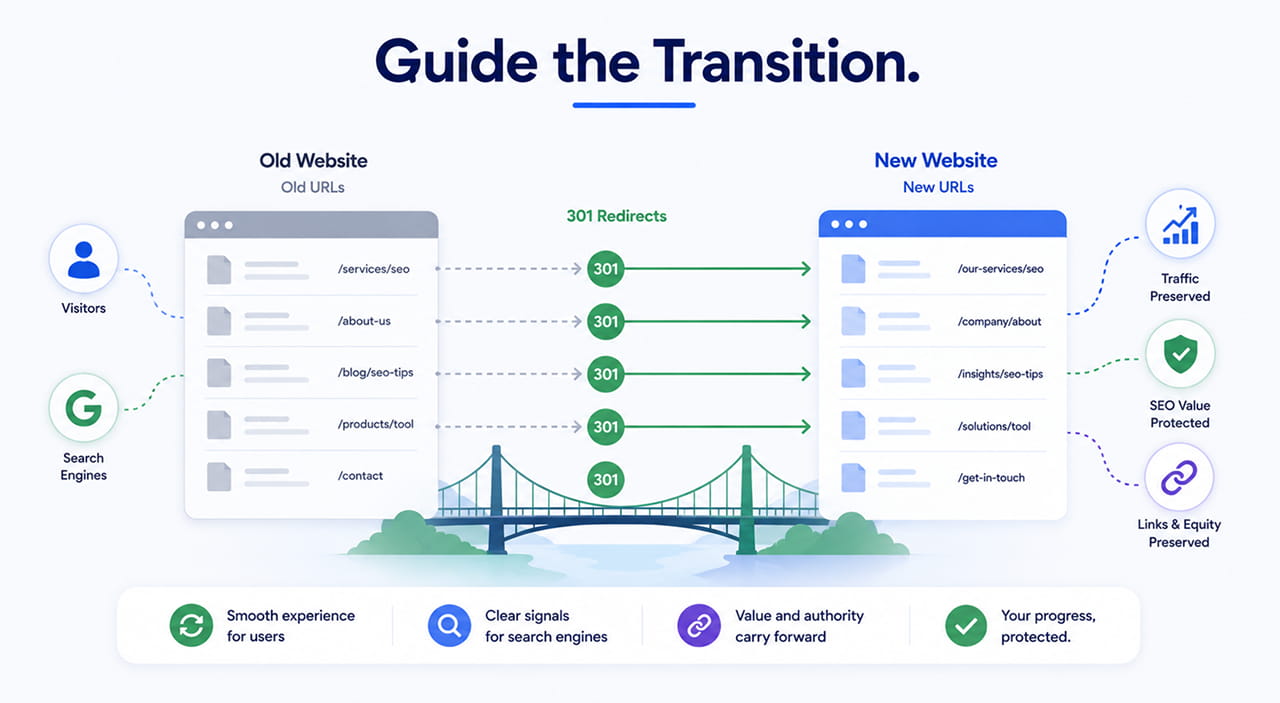
When a website launches with new URLs, visitors and search engines require guidance. Without redirects, pages that once generated traffic may suddenly return error messages. Valuable backlinks pointing to those pages lose effectiveness, and users encounter frustrating dead ends.
- Redirects preserve continuity.
- They communicate that although a page has moved, its value remains intact.
Developing a redirect map requires patience. Existing URLs should be reviewed individually and matched to the most relevant destinations on the redesigned site. This process may seem tedious, particularly for larger websites, but overlooking it often proves far more costly than investing the time upfront.
- Search visibility is built gradually.
- Redirect planning helps ensure that progress isn’t discarded overnight.
Performance and User Experience Are No Longer Optional
Modern users have little patience for slow, confusing digital experiences.
A website may look visually stunning, but if pages load slowly or navigation becomes frustrating, visitors are unlikely to remain engaged long enough to convert.
Google has repeatedly highlighted the importance of page experience. Think with Google has also reported that increasing page load times can significantly increase the likelihood of abandonment, particularly on mobile devices.
This means redesign projects should prioritize performance from the beginning rather than treating it as a post-launch enhancement.
Businesses investing in Website Development Services increasingly focus on balancing aesthetics with functionality. Mobile responsiveness, accessibility considerations, intuitive navigation, and performance optimization all contribute to stronger user experiences.
Importantly, these same factors also support SEO.
Search engines ultimately aim to recommend websites that provide value to users. Improving user experience therefore benefits both audiences and algorithms simultaneously.
Launch Day Isn’t the Finish Line
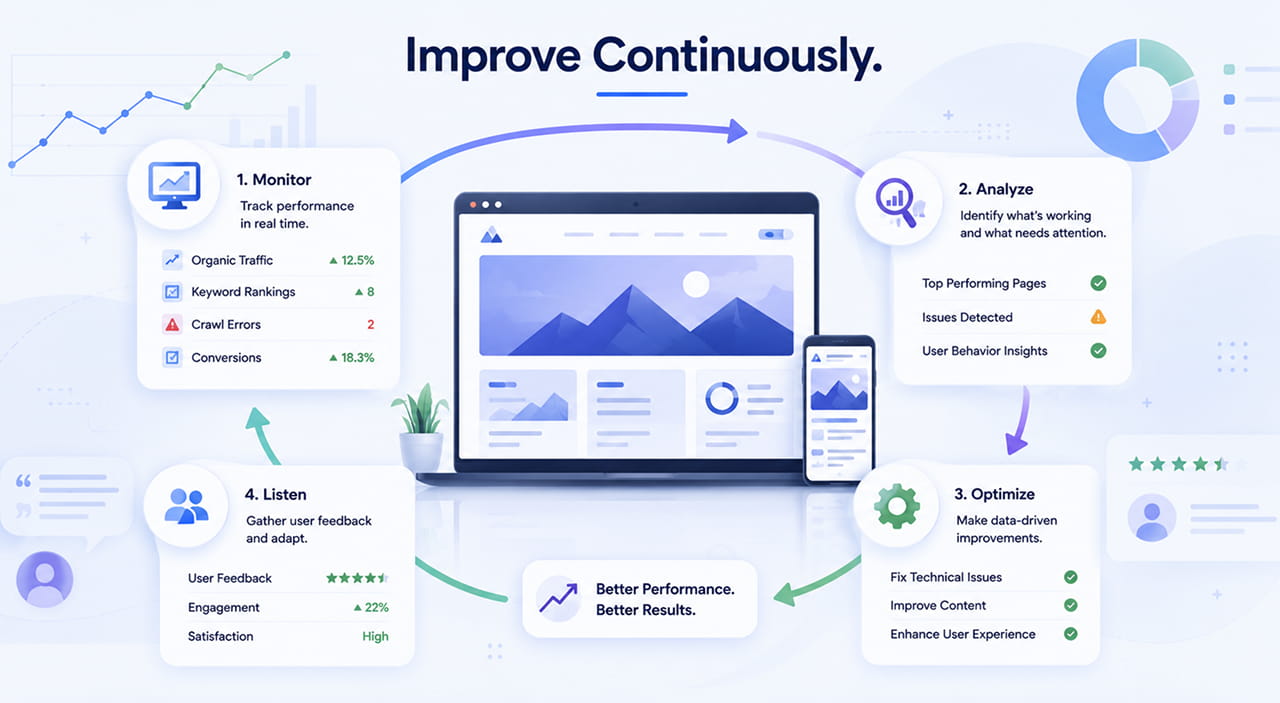
Many businesses treat launch day as the conclusion of a redesign project.
It marks the beginning of a critical observation period.
Even carefully planned migrations can produce unexpected outcomes. Rankings may fluctuate temporarily. Search engines require time to process structural changes. User behavior patterns may shift as visitors adapt to new experiences.
The organizations that navigate this period successfully are those that monitor performance proactively.
Organic traffic trends, keyword visibility, crawl reports, conversion metrics, and user engagement data all provide valuable insights into how the redesigned website performs in real-world conditions.
Businesses relying on ongoing Website Maintenance Services often identify opportunities for refinement before minor issues become significant problems. Small adjustments made early can protect long-term performance and improve user satisfaction.
Optimization should continue after launch because websites are never truly finished.
They evolve.
A Website Redesign Can Strengthen SEO
Website redesigns are frequently viewed as necessary risks.
That perception overlooks the opportunities they create.
A thoughtful redesign allows businesses to improve information architecture, address longstanding technical issues, modernize user experiences, strengthen internal linking, and align content more closely with customer expectations.
When design, development, and SEO work collaboratively, businesses emerge with websites that are not only more attractive but also more effective.
The conversation shifts from fear of losing rankings to identifying opportunities for growth.
Rather than asking whether a redesign will harm SEO, businesses should ask how the redesign can support the next phase of digital growth.
The answer often lies in recognizing that search visibility and user experience are not competing priorities.
They are interconnected.
Conclusion
Redesigning a website should not mean sacrificing years of SEO progress.
Businesses that approach redesigns strategically understand that organic visibility is one of their most valuable digital assets. They begin with data, preserve what already works, strengthen content rather than remove it, guide transitions carefully, and continue optimizing after launch.
Thinking about redesigning your website without compromising its performance and visibility? Whether you’re refreshing an outdated design, enhancing user experiences, or preparing your business for future growth, our team can help you make the transition with confidence. Reach out through our contact form and we’ll get back to you promptly. Let’s create a website that not only looks exceptional but also delivers stronger search visibility, better engagement, and lasting business value.