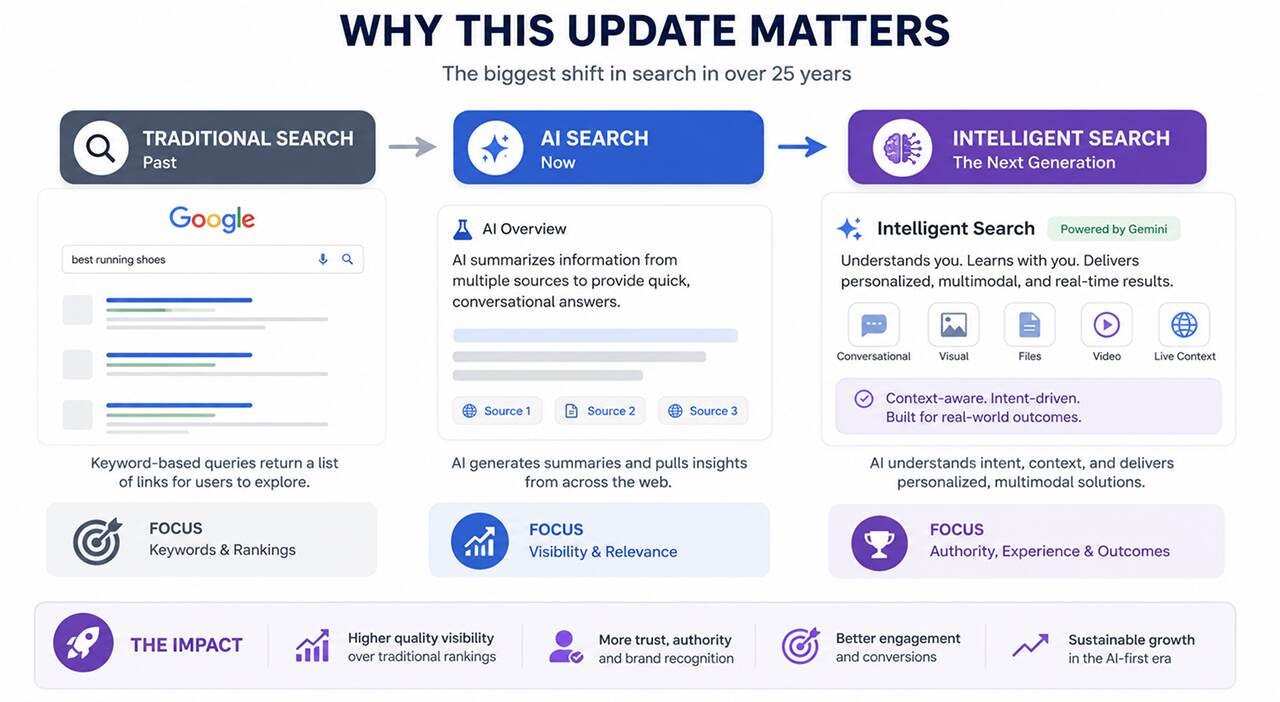
Google Universal Cart represents one of the biggest shifts in online shopping experiences in recent years. By allowing shoppers to compare products and move through purchasing journeys within Google’s ecosystem, this innovation could fundamentally reshape how ecommerce retailers attract and retain customers. For years, direct ecommerce traffic has been one of the most valuable indicators of digital success.
Unlike paid clicks or fleeting social media visits, direct visitors often arrived with intent. They typed a website address into their browser, returned after previous purchases, clicked through from saved bookmarks, or sought out a retailer they already trusted. These visitors tended to browse longer, engage more deeply with products, and convert at higher rates.
As a result, brands invested heavily in bringing customers back to their own websites. Email campaigns, loyalty programmes, search optimisation strategies, and personalised experiences were all designed to strengthen direct relationships and reduce dependence on third-party platforms.
However, convenience has a habit of reshaping consumer behaviour.
From one-click checkouts to marketplace ecosystems, ecommerce has consistently moved towards reducing friction. Google’s latest commerce initiatives suggest the next major shift may involve shortening the path between discovery and purchase even further. If shoppers increasingly compare products, save items, and resume purchases through Google universal cart ecosystem, retailers may need to prepare for a future where direct ecommerce traffic becomes less predictable.
The question isn’t whether websites will continue to matter.
It’s whether businesses are prepared to derive more value from every visit they still receive.
The Direct Traffic Advantage Ecommerce Brands Have Relied On
For many online retailers, direct traffic has long represented something more meaningful than volume.
Direct visitors often indicate brand recognition. They are customers who remember a business, trust it enough to return, and frequently require less persuasion before making purchasing decisions.
This traffic also provides businesses with greater control over the customer journey. Once shoppers arrive on a website, retailers can influence navigation paths, highlight complementary products, promote loyalty programmes, capture first-party data, and reinforce brand identity.
In an increasingly competitive digital environment, these advantages have become invaluable.
Yet customer journeys rarely remain static.
Consumers have gradually embraced experiences that simplify decision-making. The success of marketplaces, mobile wallets, and buy-now-pay-later solutions all demonstrate a clear preference for convenience.
Google’s commerce developments may simply represent the next stage in that evolution.
What Google Universal Cart Signals About the Future of Shopping
Google’s commerce initiatives aim to make shopping journeys more seamless by helping consumers save products, compare options, and resume purchasing decisions more efficiently across its ecosystem.
Rather than repeatedly revisiting multiple websites, shoppers can potentially continue where they left off, reducing the effort required to complete transactions.
For consumers, the benefits are obvious.
- Convenience improves.
- Decision fatigue decreases.
- The process becomes faster.
For retailers, however, these experiences raise important strategic questions.
If more product comparisons happen before a visitor reaches your website, will fewer consumers arrive during the exploratory phase of the buying process?
If Google increasingly facilitates product consideration, what role will websites play in influencing purchase decisions?
These questions matter because the answers could reshape how ecommerce businesses define success.
According to Google’s own commerce announcements, the objective is to create shopping experiences that are more useful and less fragmented. While these innovations may improve customer experiences, they also challenge traditional assumptions about traffic acquisition.
Fewer Visits Could Mean Higher Expectations
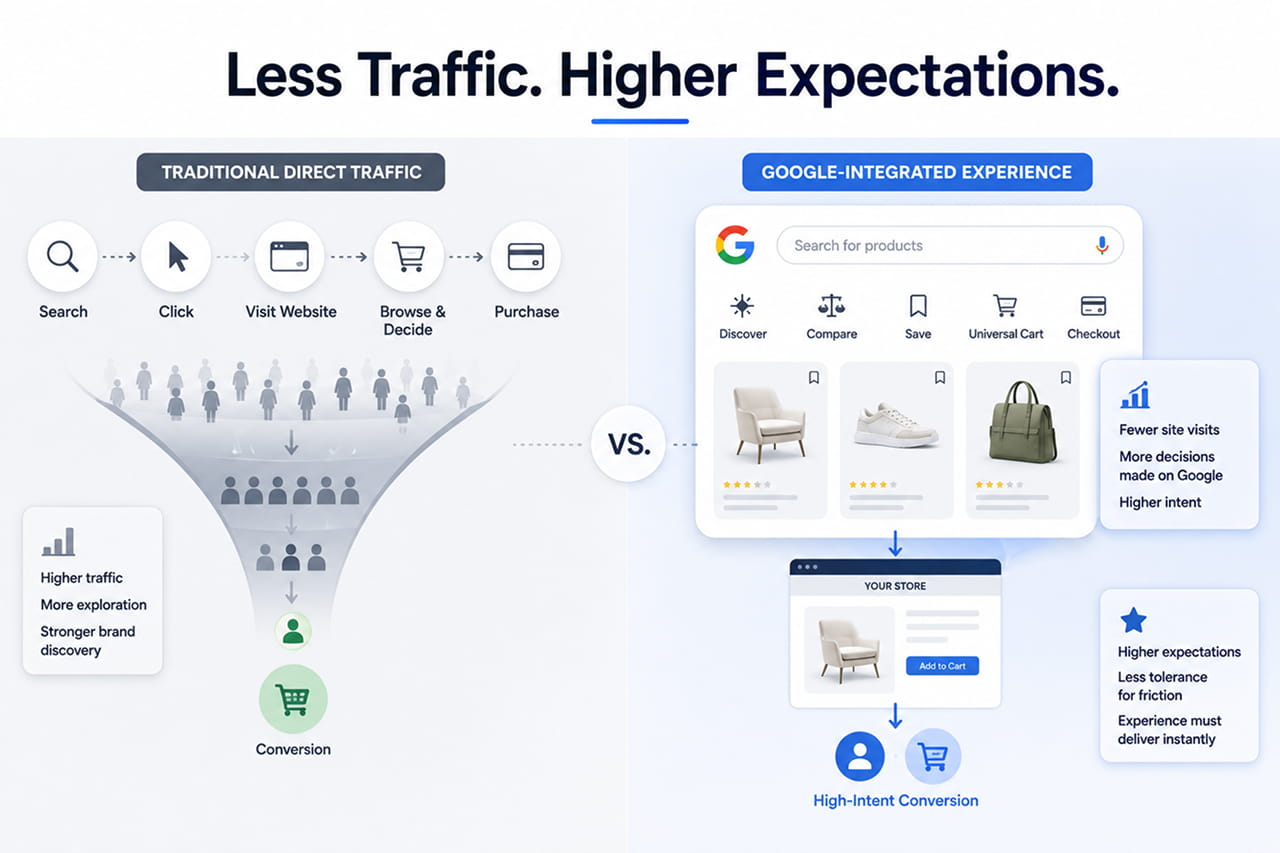
A decline in exploratory traffic doesn’t necessarily mean websites lose relevance. Google Universal Cart may reduce friction in the online shopping experience.
In many ways, it may increase their importance. Ecommerce retailers should closely monitor how Google Universal Cart affects customer journeys.
If customers arrive later in the decision-making process, businesses have less time to build confidence and remove objections.
Visitors may expect immediate reassurance that they’ve found the right brand.
This places greater emphasis on:
- Clear value propositions.
- Compelling product experiences.
- Transparent pricing.
- Strong trust signals.
- Seamless navigation.
- Frictionless checkout journeys.
Retailers can no longer assume visitors will browse multiple pages before deciding whether to stay.
Every interaction needs to work harder.
Businesses investing in strategic website design services often discover that customer confidence is shaped within moments of arrival. Strong design isn’t merely visual. It helps users understand, trust, and engage more efficiently.
Why Technical Foundations Could Become Competitive Advantages
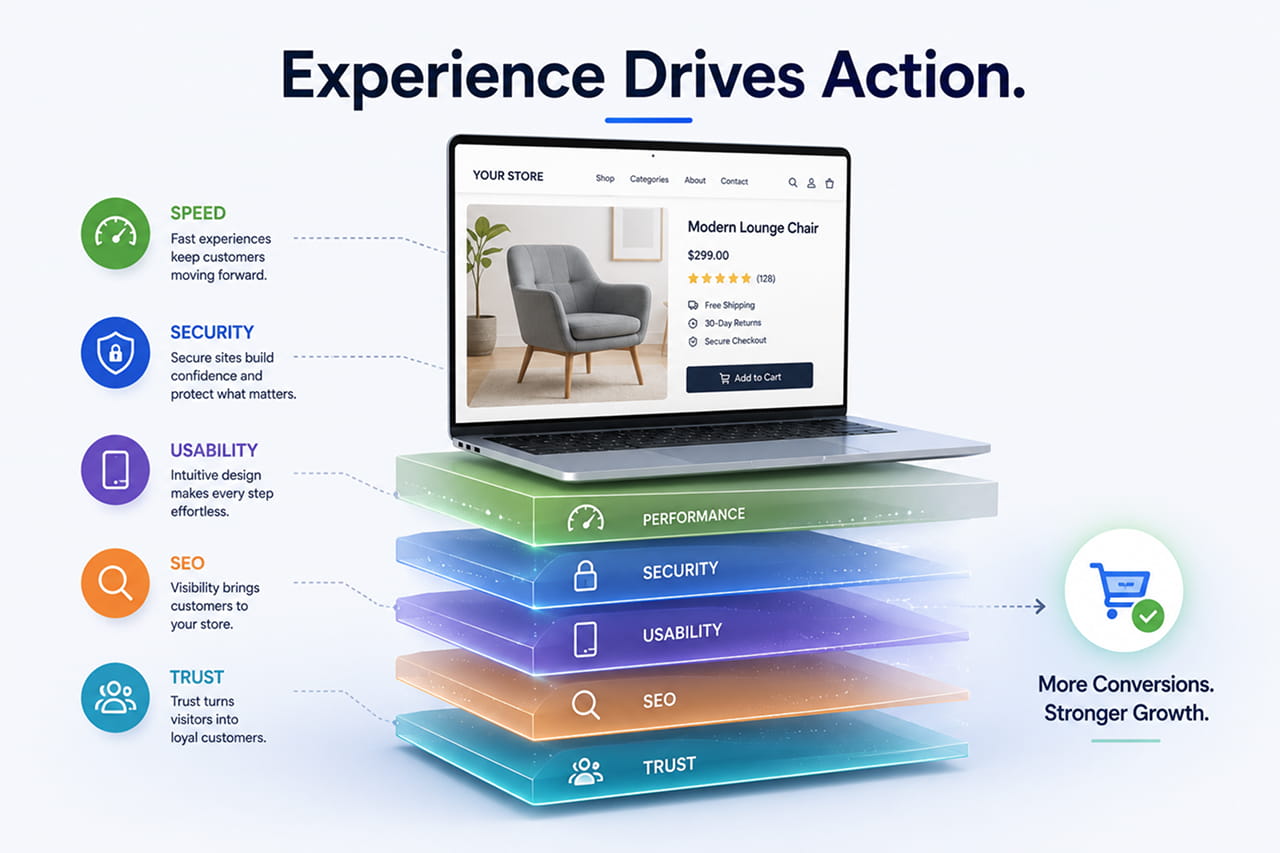
Convenience-driven ecosystems reward reliability. Google Universal Cart is changing how shoppers move between product discovery and purchase decisions. Businesses preparing for Google Universal Cart should strengthen their owned channels.
If shoppers increasingly move through condensed journeys, technical weaknesses become harder to hide. Google Universal Cart highlights the growing importance of product data quality.
Slow-loading pages, broken experiences, outdated information, and poor mobile usability may quickly discourage visitors who have numerous alternatives available.
Research from Think with Google has previously found that mobile users are significantly more likely to abandon websites that fail to load quickly.
Performance therefore becomes more than a technical metric. Retailers can adapt to Google Universal Cart by improving customer retention strategies.
It becomes part of the customer experience itself. Google Universal Cart could influence how ecommerce performance is measured.
Businesses conducting regular technical SEO audits are often better positioned to identify issues affecting discoverability, usability, and conversion potential before they escalate into larger problems.
Similarly, comprehensive technical SEO services help strengthen the foundations that support both search visibility and customer satisfaction.
Loyalty May Become Harder to Earn
One of the less discussed implications of Google’s evolving commerce experiences is their potential impact on customer relationships.
Historically, websites provided retailers with valuable opportunities to build loyalty beyond individual transactions. Customers who arrived directly often subscribed to newsletters, joined rewards programs, created accounts, explored related products, and became familiar with a brand’s story and values.
If discovery and comparison increasingly happen elsewhere, retailers may have fewer touchpoints before a purchase decision is made.
This doesn’t mean loyalty disappears. It means businesses may need to become more intentional about earning it.
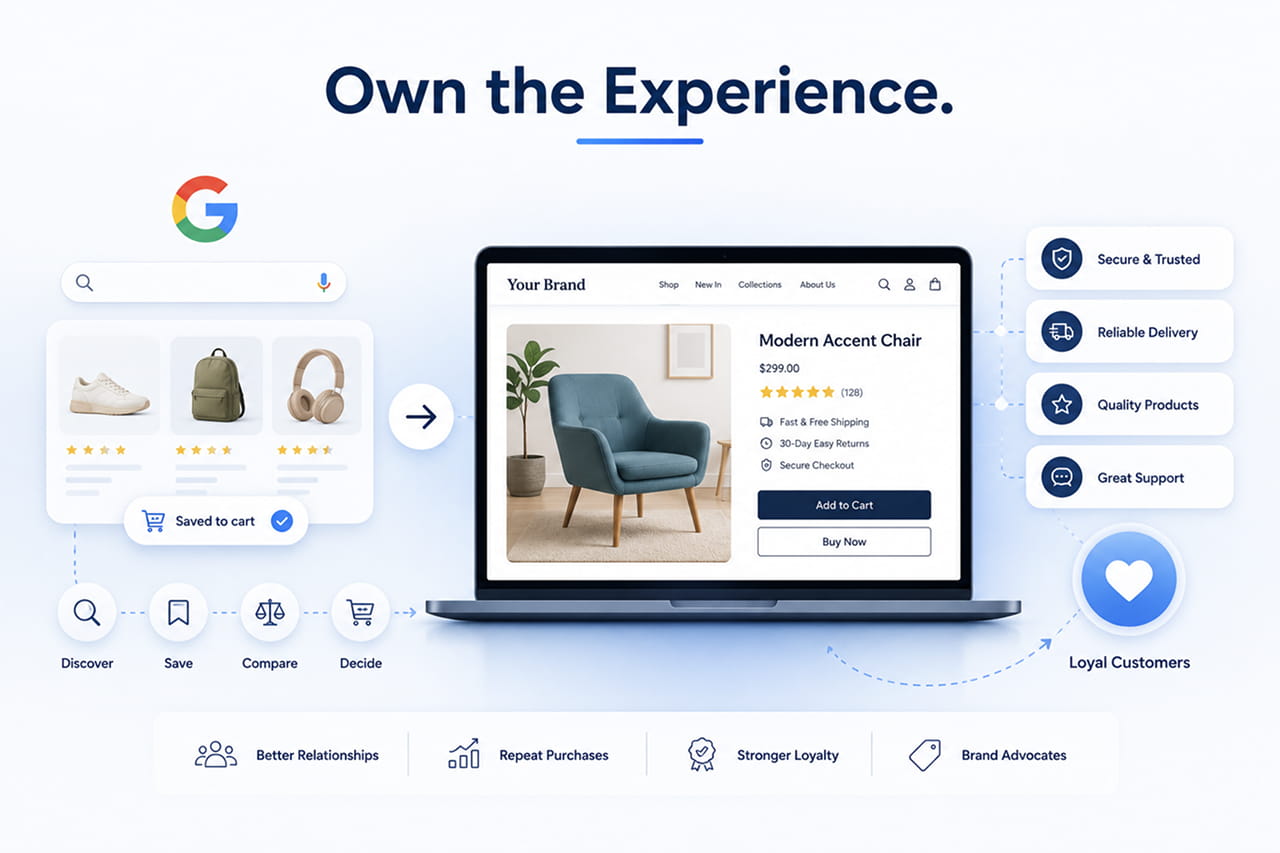
The brands that stand out will likely be those that deliver experiences customers genuinely remember. That includes thoughtful product storytelling, exceptional post-purchase communication, transparent policies, and customer experiences that extend beyond the transaction itself.
Retailers should also reconsider how they encourage ongoing engagement once a customer has completed a purchase. Email marketing, personalized recommendations, educational content, and loyalty initiatives may become even more valuable in strengthening first-party relationships.
In a world where discovery becomes increasingly shared, the experiences businesses own become their greatest differentiator.
The Shift from Traffic Acquisition to Traffic Efficiency
For years, ecommerce growth strategies have largely revolved around generating more visits.
- More traffic meant more opportunities.
- More opportunities meant more sales.
- That formula is becoming increasingly expensive.
Customer acquisition costs continue to rise across paid channels. Organic competition remains intense. At the same time, new discovery experiences are reducing the number of steps consumers take before reaching a decision.
The result is a subtle but significant shift in mindset.
Instead of asking:
“How do we generate more traffic?”
Businesses may increasingly ask:
“How do we maximize the value of the traffic we already earn?”
This shift places greater emphasis on conversion optimization, customer experience, and operational excellence.
It also reinforces the importance of reliable website infrastructure.
Businesses investing in ongoing website maintenance services often find that consistent improvements in performance, security, and usability contribute directly to stronger customer outcomes.
Preparing for the Next Phase of Ecommerce
Google Universal Cart reflects a broader trend shaping digital commerce. Google Universal Cart reinforces the need for accurate product information.
Consumers increasingly value convenience. Brands should evaluate how Google Universal Cart impacts attribution models.
They expect fewer steps, faster decisions, and experiences that adapt to their needs. Businesses cannot always control how those expectations evolve. What they can control is how effectively they respond.
The retailers most likely to succeed will be those willing to adapt their strategies before change becomes unavoidable. They will invest in experiences that build trust quickly, maintain strong technical foundations, and maximize every interaction that occurs on their own platforms.
Direct traffic may become harder to predict. But memorable customer experiences remain entirely within a retailer’s control. The future of ecommerce will not simply reward the businesses attracting the largest audiences.
It may increasingly favor those creating the most meaningful experiences after the click. Businesses should view Google Universal Cart as both a challenge and an opportunity.
Brands that combine strong technical foundations with memorable customer experiences, compelling product journeys, and a commitment to continuous improvement will be better positioned to navigate whatever comes next.
Websites still matter. Retailers that prepare for Google Universal Cart early may gain a competitive advantage.
They simply have a bigger responsibility. Google Universal Cart could redefine expectations around convenience and personalization.
Is your ecommerce website ready for the next wave of digital commerce? As shopping behaviors evolve, businesses need more than just traffic—they need seamless experiences that inspire confidence, simplify decision-making, and encourage lasting customer loyalty.
Whether you’re looking to optimize website performance, refine the customer journey, strengthen your technical SEO, or elevate your ecommerce experience, we’re here to help.
Reach out through our contact form and we’ll get back to you promptly. Together, let’s create an ecommerce strategy built for the future—one that keeps your brand discoverable, engaging, and prepared for whatever comes next.